

Epidemiologist. Security engineer. Former Q-cleared scientist, Sandia National Laboratories. Ph.D. in Environmental Health Science, Emerging Infectious Disease and Epidemiology, DHS Center of Excellence Research Fellow. Former U.S. Army infantryman.
Bottom Line Up Front. Five judgments, scored 0 to 100 on confidence, with evidence graded known, assessed, or unknown throughout.
1. The shortage problem is real, worsening, and concentrated in the cheapest drugs in the pharmacy. Active US shortages reached 227 in the second quarter of 2026, the third consecutive quarterly increase, led by sterile injectables: chemotherapy, sedatives, IV fluids, electrolytes (confidence 95, published trade data).
2. The most repeated claim in this debate is false. China does not make 80 or 90 percent of American medicine. By FDA’s own count, Chinese facilities were 13 percent of the plants making active ingredients for the US market, behind the United States at 28 percent, the EU at 26 percent, and India at 18 percent (confidence 90 on the facility count; the caveat that follows matters more than the number).
3. That caveat is the actual scandal, and it is the same failure Part I documented in another domain. FDA told Congress, in writing, that it does not know whether those facilities are actually producing ingredients, how much they produce, or where the output goes. We are arguing about a dependency we have never measured (confidence 95; it is the agency’s own testimony).
4. The Section 232 tariff aims at the wrong molecule. It hits patented, branded drugs at rates up to 100 percent while expressly exempting generics, biosimilars, and their ingredients, which is where the fragility, the sole-source concentration, and the foreign dependence actually live. Commerce must advise the President within a year, by April 2027, on whether to extend the tariff to generics, meaning the policy either misses the vulnerability now or taxes it later (confidence 90 on the reading of the proclamation; the strategic judgment is mine).
5. Onshoring alone will not fix this, because the binding constraint is not geography but redundancy and visibility. Just under half of new 2026 shortages are sole-source products, and FDA’s own root-cause analysis found 62 percent of shortages start as quality failures. The fix is a program, not a tariff: onshore every category of medical production with redundancy mandated into the build, and put the entire supply chain, and the federal money that funds it, on one tamper-evident, tiered-access ledger (confidence 85; the specification is Section VI).
I. What a Shortage Actually Does
Start in an oncology pharmacy, because that is where the abstraction ends. When ifosfamide goes short, a pharmacist does not simply order a different drug. Ifosfamide treats sarcomas, testicular cancer, and lymphomas on protocols validated over decades. The substitutes are less studied for the indication, more toxic, or both. So a tumor board meets and decides who gets the drug, who gets the second-best regimen, and who waits. That is rationing. It happens quietly, on a Tuesday, in a country that believes it does not ration care.
In the second quarter of 2026, active drug shortages in the United States climbed to 227, the third straight quarterly increase [1]. CT contrast agents and ifosfamide are among the critically scarce [2]. The list is dominated by sterile injectables, the drugs given through an IV in a hospital: chemotherapy agents, sedatives, controlled-substance analgesics, IV fluids, electrolyte replacements [1]. These are not exotic products. They are the pharmacological floor of hospital medicine, and most are older than the physicians administering them.
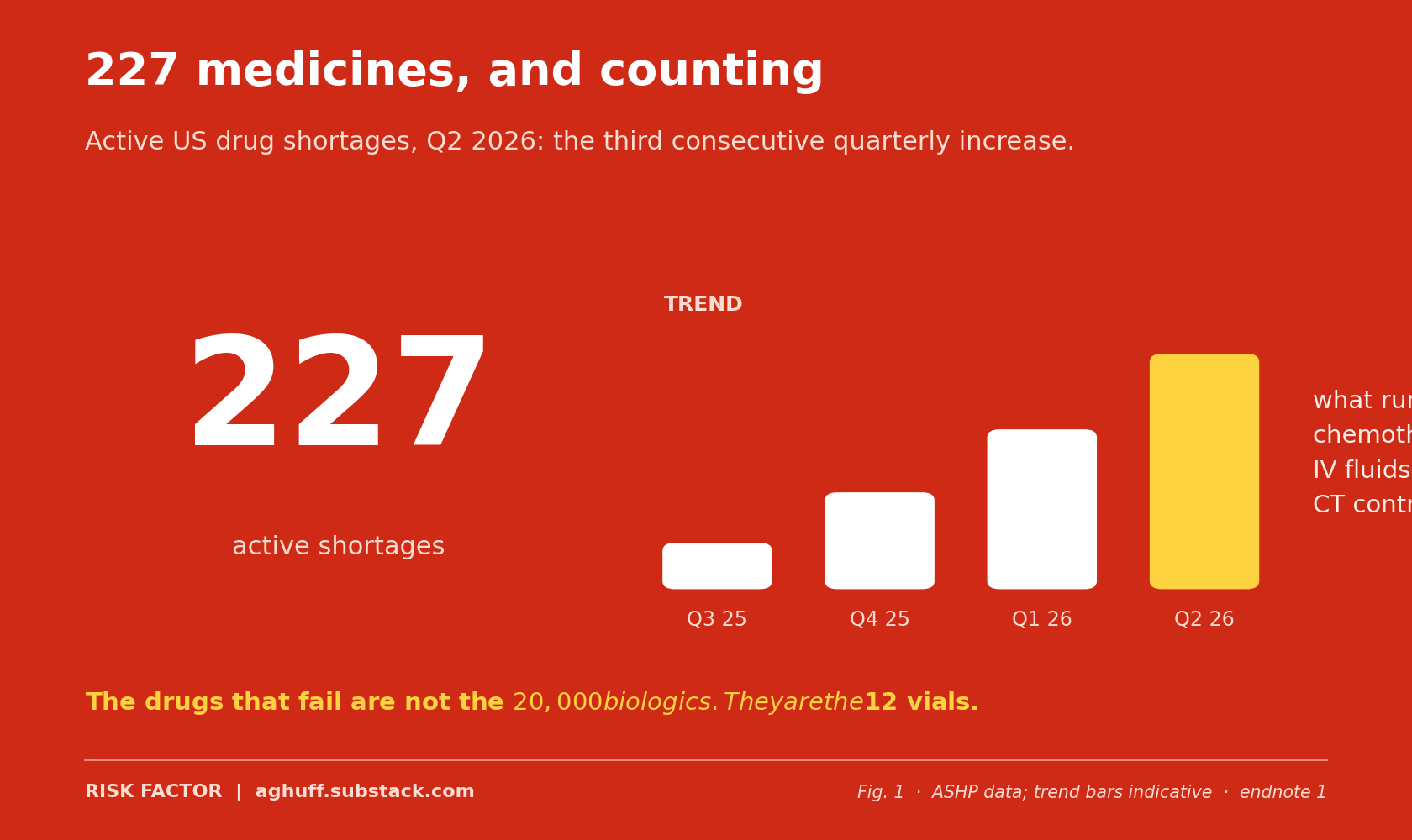
Fig. 1. 227 medicines and counting. The drugs that fail are the $12 vials, not the $20,000 biologics.
Note the pattern, because it inverts the intuition. The drugs that fail are almost never the expensive new biologics. Nobody runs out of the $20,000-a-month immunotherapy. They run out of a $12 vial of a drug approved in 1987. GAO found the same: shortages most commonly affect sterile injectables critical to hospital and cancer care, and while new shortages have generally declined since 2020, the ones that occur last longer [3]. The system is not producing more crises. It is producing more durable ones.
What this costs in lives is a question I cannot answer honestly, and that is itself a finding. There is credible evidence that shortages force substitution to less effective or more toxic regimens, delay treatment, and consume enormous clinical labor. What does not exist is a rigorous national estimate of excess mortality attributable to drug shortages, because no one systematically collects the outcome data. As an epidemiologist I can tell you exactly how that study would be designed. As a citizen I can tell you no one has been funded to run it. Hold the thought, because in the next section it stops being a coincidence and starts being a pattern.
II. Nobody Actually Knows
Here is the number you have heard, and it is wrong. You have been told that China makes 80, or 90, or 95 percent of America’s medicine. It is repeated in op-eds, campaign speeches, and cable segments. It is false, and it is worth being precise about why, because precision is the only thing separating this analysis from the panic.
The authoritative federal accounting came from Dr. Janet Woodcock, director of FDA’s drug center, testifying before the House Energy and Commerce Committee on October 30, 2019. As of August 2019, the facilities making active pharmaceutical ingredients for the US market broke down as: United States 28 percent, European Union 26 percent, India 18 percent, China 13 percent, Canada 2 percent, rest of world 13 percent [4]. China was fourth. Not first, not a monopoly, fourth. The trend line is real, Chinese API facilities more than doubled between 2010 and 2019, but the level never approached the myth [4].
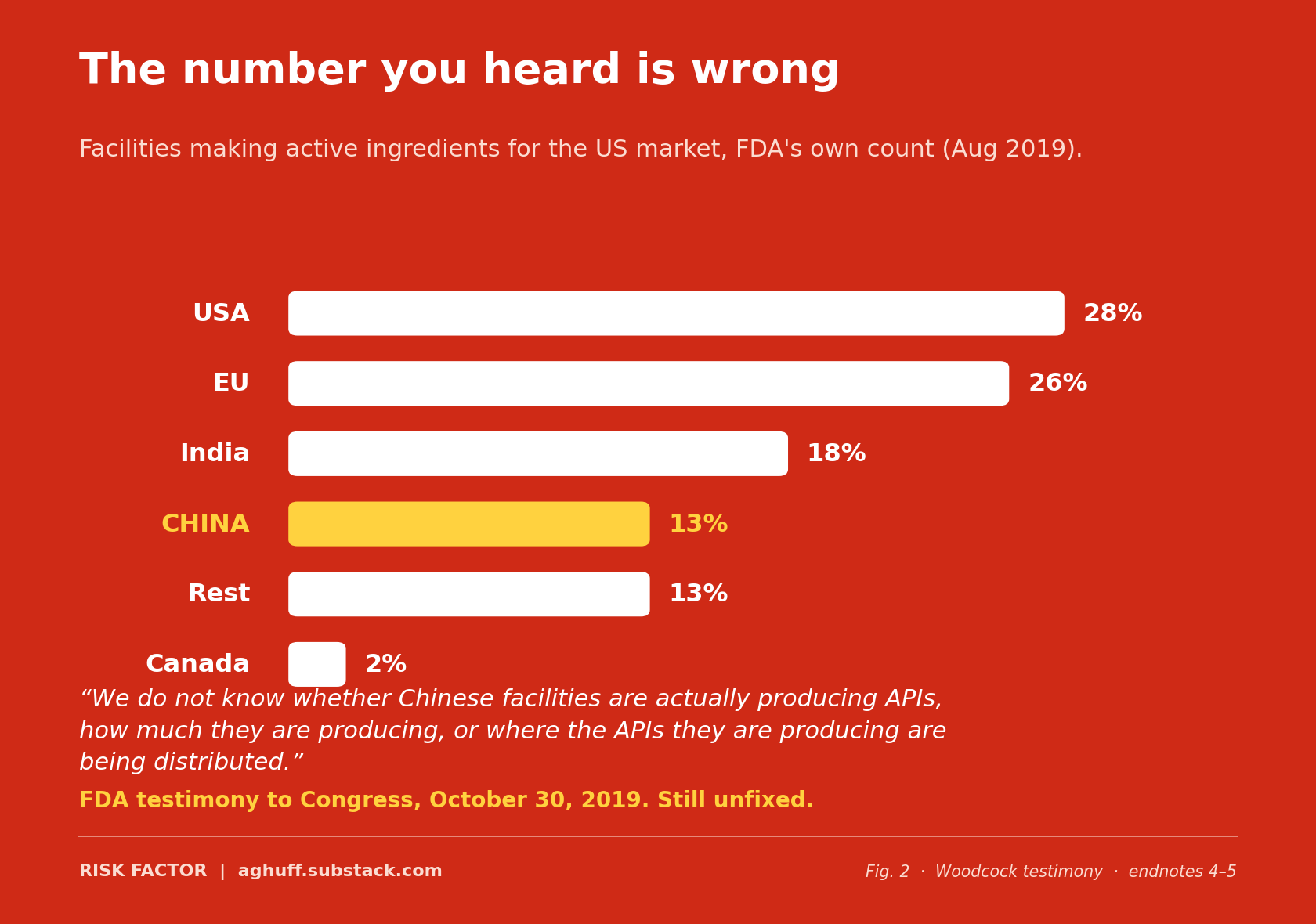
Fig. 2. The number you heard is wrong: FDA’s own facility count, and its own admission that it cannot see volume.
Now the passage that should have ended the debate and was instead ignored. In the same testimony, FDA stated its data limitations in plain language: manufacturers are not required to report whether they are actually producing an ingredient at a registered facility, or in what volume. In the agency’s own words, “we do not know whether Chinese facilities are actually producing APIs, how much they are producing, or where the APIs they are producing are being distributed worldwide, including in the United States” [5].
Read that again. The agency responsible for the drug supply counts registered addresses, not output. A facility count is a census of buildings. It says nothing about volume, nothing about which molecules hang on a single supplier, and nothing about what happens to American hospitals if one province of one country stops shipping. We have a map with the roads drawn and no traffic on it. FDA said so itself, seven years ago, and the data authority it would need to fix this has still not been granted.
When FDA drilled into the drugs that matter most, the picture sharpened, and worsened. For the 370 WHO essential medicines marketed in the United States, FDA found three whose active ingredient makers existed only in China: capreomycin and streptomycin, both tuberculosis drugs, and sulfadiazine [6]. For the medical countermeasures held against biological attack, the numbers invert the national totals: for ciprofloxacin, the anthrax drug, the United States had one API facility on earth against China’s three; for doxycycline, two against three [7]. Averages are where this vulnerability hides. It lives in specific molecules, and the specific molecules are the ones you would want in a war.
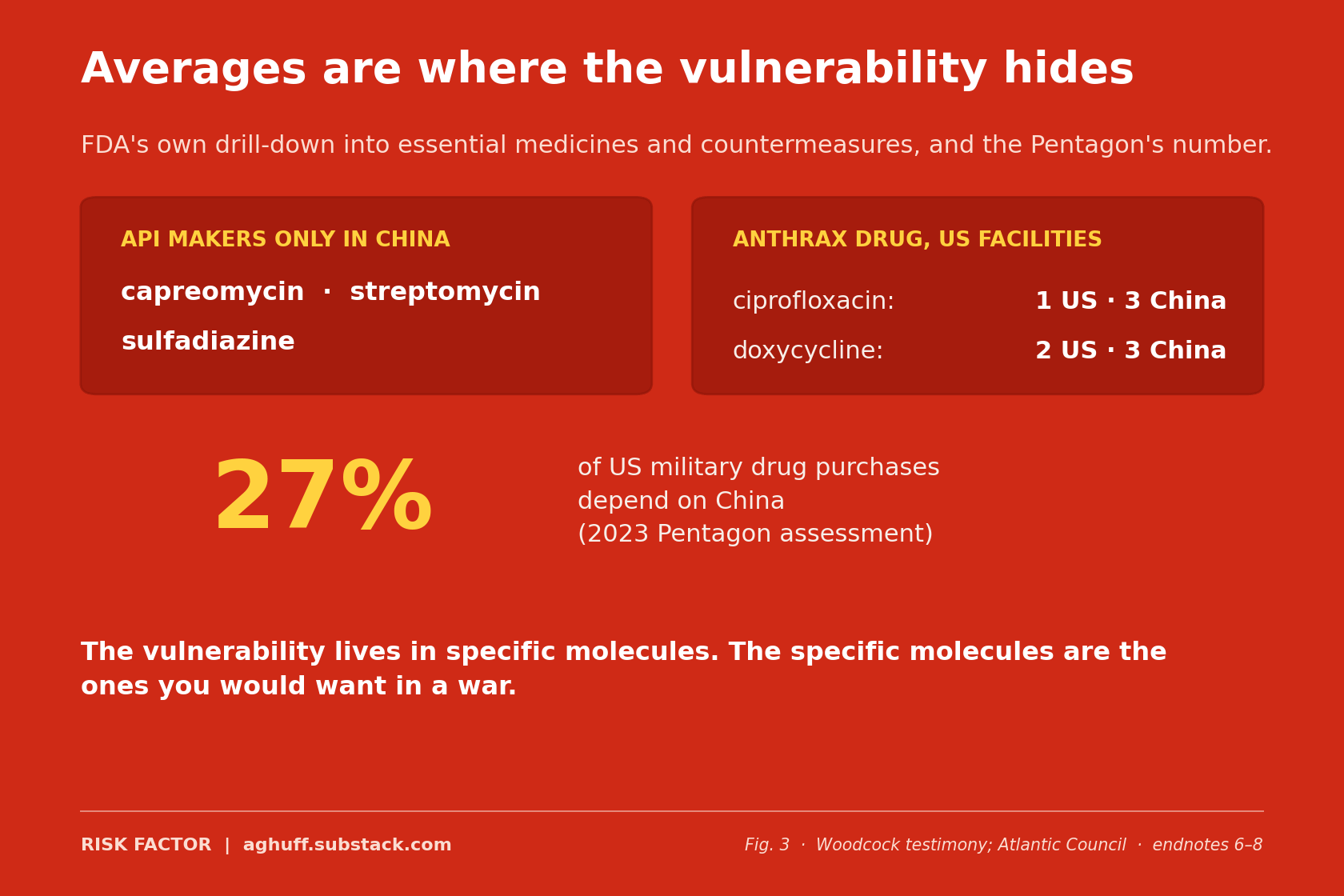
Fig. 3. Averages are where the vulnerability hides: China-only essential medicines, the anthrax drug, the Pentagon’s 27 percent.
This is the Part I problem wearing different clothes. In the first part of this series I argued that surveillance data held in private custody predictably fails the public, and that the fix is architecture: public by default, standards-based, measurable. The pharmaceutical supply chain is the same failure in a second domain. Manufacturers are not required to disclose, publicly and machine-readably, where each ingredient originates, what capacity exists, or where the single points of failure are. Commercial confidentiality swallows the public interest, and the country conducts a strategic debate about dependence using a proxy everyone involved knows is a proxy.
Both the alarmists and the complacent argue from the same empty table. The alarmists inflate a facility count into a monopoly. The complacent note the count is only 13 percent and conclude there is no problem. Both are wrong for the same reason: the relevant question is not how many buildings but how many single points of failure, and that question has never been answered in public.
What is defensible is narrower and still serious. Dependence is concentrated in specific older molecules, not spread across the formulary. India, the largest supplier of generic doses to the American market, is itself substantially dependent on Chinese-made ingredients, a second-order exposure no first-order count can see. And the Defense Department has been more candid than the civilian agencies: a 2023 Pentagon assessment found 27 percent of military drug purchases depend on China [8]. A specific, operational number about a population the government actually tracks. It is the best evidence on the table, and it is a military estimate, not a marketing one.
III. The Leverage
The question that matters is not whether we buy from China. It is what happens if China decides we should not.
Start with what is known. China has built the legal machinery for exactly this pressure: its 2020 Export Control Law and 2021 Biosecurity Law grant broad authority to restrict strategic exports [9]. That is not speculation about intent; it is a reading of statutes that exist.
Then the demonstrated behavior, because Beijing has already run this play in an adjacent market. China controls roughly 60 percent of global rare earth mining and about 90 percent of refining, and it has used that chokehold as leverage in trade negotiations with Washington, extracting concessions [10]. That is the proof of concept: when China holds a chokepoint, it uses it, deliberately rather than impulsively.
Now the honest counterargument, which most commentary omits. Even China’s rare earth restrictions carved out medical uses [11]. A blanket pharmaceutical embargo would be an extraordinary escalation: it would kill civilians visibly, vaporize China’s own export revenue in the sector, and permanently convert every importing nation into a reshoring program. The likely coercive use is not an embargo. It is selective, deniable, and slow: a licensing delay here, an inspection finding there, a quiet reallocation of one ingredient during one negotiation. Pressure that looks like a supply chain hiccup and never earns attribution.
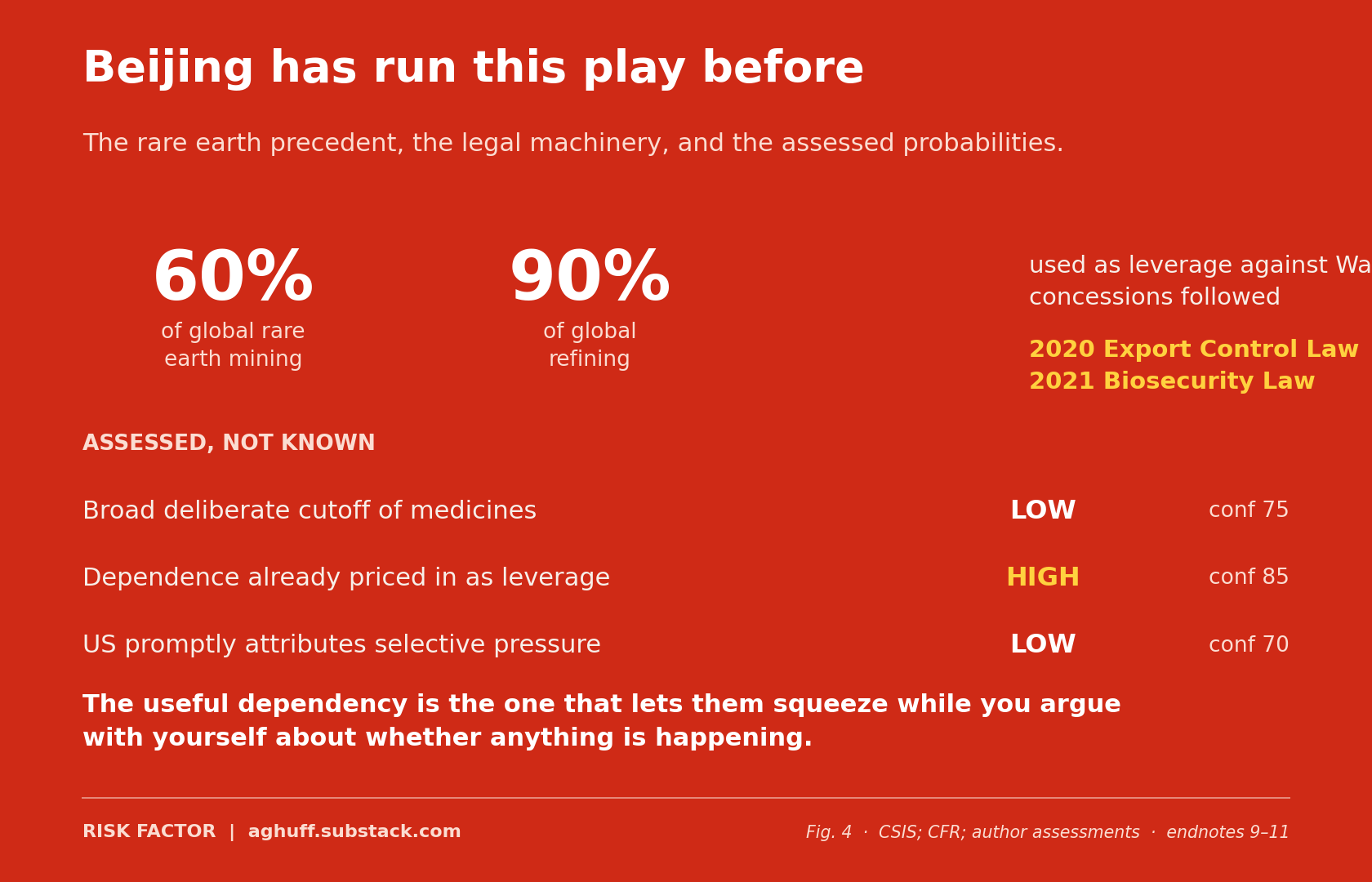
Fig. 4. The rare earth precedent, the legal machinery, and the assessed probabilities.
So my assessment, labeled as assessment: the probability of a deliberate broad cutoff of medicines to the United States in the near term is low (confidence 75). The probability that pharmaceutical dependence is already priced into Beijing’s calculations as latent leverage is high (confidence 85). And the probability that we would promptly and correctly attribute selective pressure if it occurred is low (confidence 70), for the reason established in Section II: we cannot see the supply chain well enough to distinguish coercion from ordinary failure.
That last point is the national security core of this piece. An adversary does not need to weaponize a dependency you can measure and prove. The useful dependency is the one that lets them squeeze while you argue with yourself about whether anything is happening.
IV. The Tariff Aims at the Wrong Molecule
On April 2, 2026, the President invoked Section 232 of the Trade Expansion Act against imported medicine, and on July 31 the duties began. The structure, from the proclamation itself: a 100 percent tariff on pharmaceutical products under valid, unexpired US patents, Orange Book and Purple Book listed, plus their active ingredients and key starting materials [12]. The rate replaces existing tariffs for the product. Around that headline number sits a lattice of exceptions: products of Japan, EU member states, Korea, Switzerland, and Liechtenstein pay 15 percent instead; the UK pays a surcharge reducible by a future pricing agreement; thirteen companies that signed most-favored-nation pricing deals before the proclamation are exempt outright; seventeen companies listed in Annex III got a grace period to September 29; and companies with Commerce-approved onshoring plans pay a reduced additional rate into 2030, falling to zero if they also sign MFN pricing agreements [12]. Orphan drugs, cell and gene therapies, plasma-derived products, and, notably, medical countermeasures for chemical, biological, radiological, and nuclear threats are carved out [13].
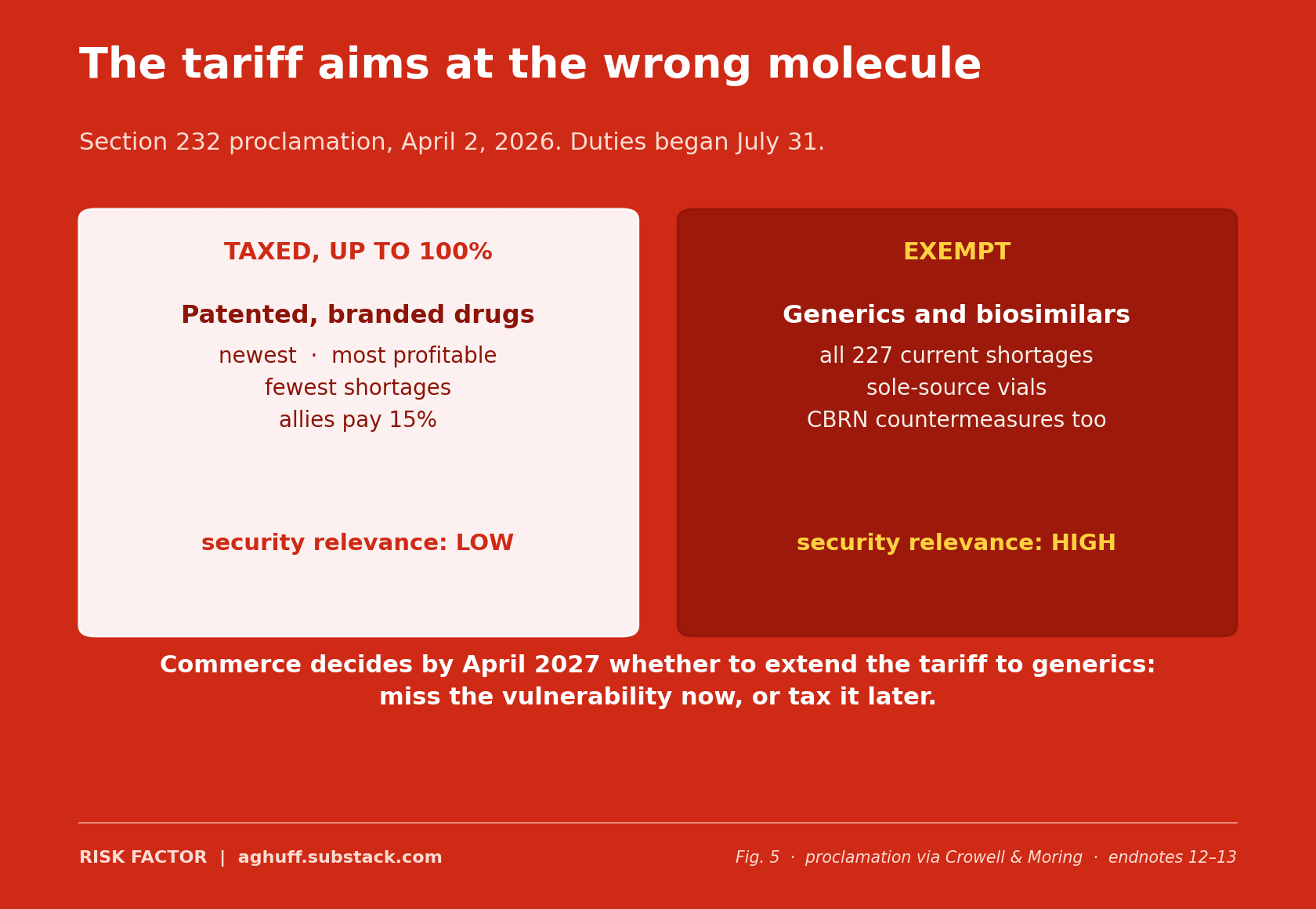
Fig. 5. Taxed versus exempt: the tariff falls on the category with the fewest shortages.
Here is the part that should stop you. Generic pharmaceuticals, biosimilars, and their associated ingredients are expressly excluded [13].
Sit with the architecture of that decision. The tariff falls on patented, branded medicines: the newest, most profitable, most protected products in the industry, made by firms with the pricing power to absorb or pass along a duty. The exemption covers generics: the oldest, cheapest, thinnest-margin products, disproportionately made abroad, and the exact category that produced all 227 of the shortages this piece opened with. The proclamation even exempts the CBRN countermeasures whose China-concentrated ingredient base FDA flagged to Congress in 2019.
The policy is pointed away from the vulnerability. That is not a rhetorical flourish; it is the literal design of the annexes. If the stated purpose of a Section 232 action is national security, the security case rests overwhelmingly on sterile injectables and essential generics, and those are precisely what the order does not touch.
Now the second blade. The exemption is not permanent. Commerce is required, within one year of the proclamation, to advise the President on whether circumstances warrant extending the tariffs to generics and their ingredients [13]. So the policy resolves into two futures, both bad on its own terms. In the first, the exemption holds, and the tariff goes on taxing the category that was never the security problem while the fragile category remains untouched and unfixed. In the second, the exemption lapses, and the United States applies duties of up to 100 percent to sole-source, thin-margin, already-failing products that hospitals cannot replace. The predictable result of taxing a $12 vial made by one supplier is not onshoring. It is exit. The supplier leaves the American market, and the shortage list grows.
There is a coherent version of this policy: penalize concentration in critical generics while funding the domestic capacity to replace it, with the revenue hypothecated to the build. That is not what was issued.
A fair word for the other side. The tariff is not only a supply-chain instrument. It is leverage for investment commitments and MFN drug pricing, and the administration has extracted onshoring pledges by wielding it; the reduced-rate tiers are the mechanism doing that work. If those plants get built, inspected, and licensed, the policy will have bought something real. My objection is narrower and, I think, fatal: the instrument is aimed at the category with the least security relevance, on a clock that will eventually swing it toward the category with the most.
V. Why Reshoring Is Harder Than a Press Release
Announcements are not capacity. A manufacturing commitment and a functioning plant are separated by years: site selection, construction, equipment qualification, process validation, pre-approval inspection, and filings for every product line. Sterile injectable capacity is the hardest of all, because aseptic manufacturing tolerates no error, and its failures are how shortages start. FDA’s root-cause analysis of 163 shortages found quality problems responsible 62 percent of the time [14]. Treat every reshoring number in a press release as an intention with a multi-year lag and a nonzero failure rate, not as supply.
The economics are the real enemy, and they are domestic. Generic sterile injectables sell into a market that rewards the lowest bid and nothing else. Group purchasing organizations compete suppliers down to margins that cannot fund redundancy, buffer inventory, or aggressive maintenance. A manufacturer that builds a second line to protect against failure prices itself out of the contract. The market systematically selects for fragility, and it would do so wherever the plants sat. And when the last supplier of an unprofitable vial decides to quit, the government has no recourse: as Woodcock told Congress, FDA has no power to order anyone to make a drug [5].
This is why the geography framing misleads. Just under half of new 2026 shortages are sole-source products [15]. Sole-source means one manufacturer, often one line in one plant. When that line goes down, the country has a shortage. Relocating the line to American soil converts a foreign single point of failure into a domestic single point of failure. It feels like sovereignty. It is the same brittle system with a flag on it.
Sovereignty in medicine is not a map. It is redundancy, buffer stock, quality-based purchasing, and visibility. Geography is one input among four, and it is the one that polls best.
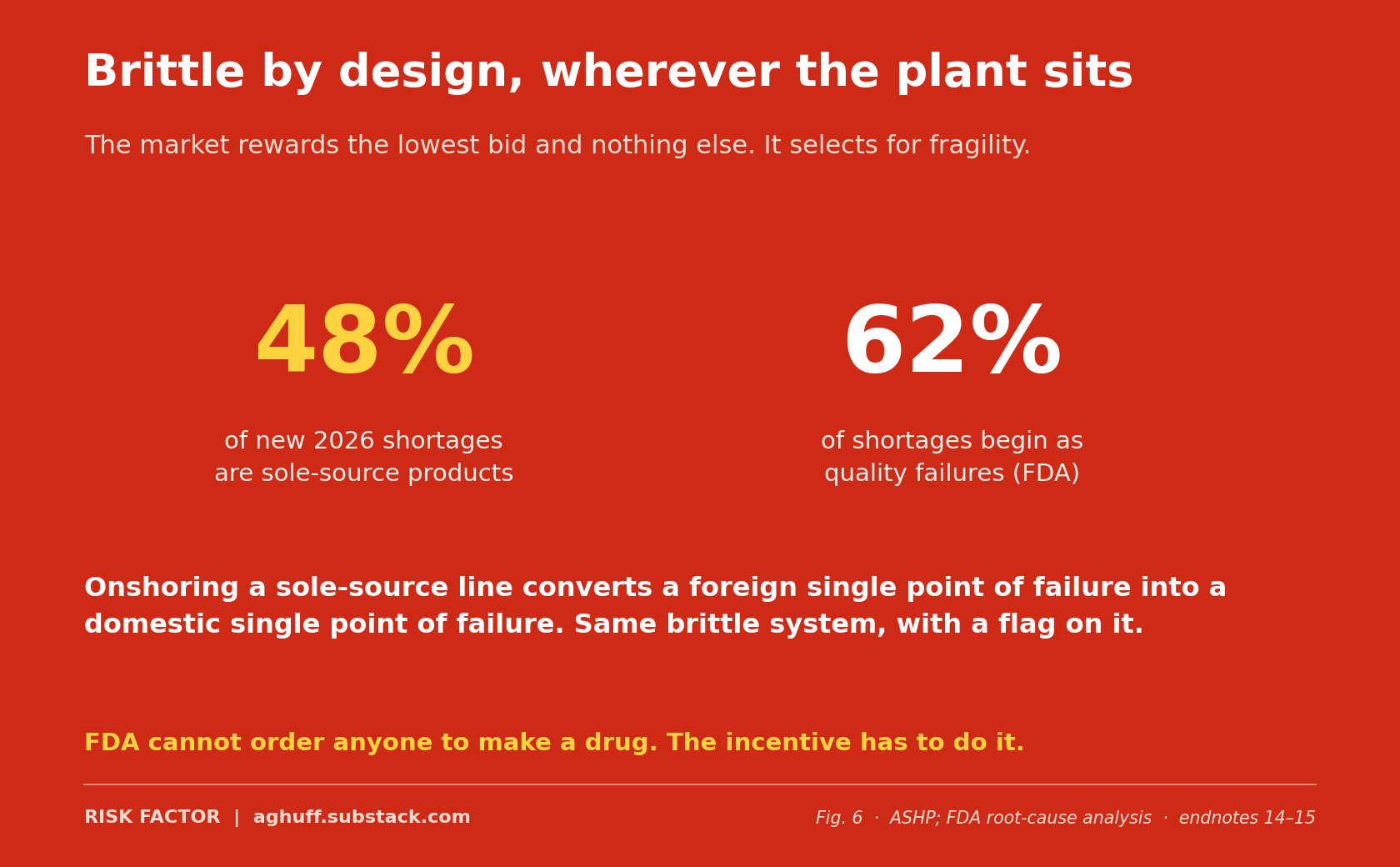
Fig. 6. Brittle by design: sole-source concentration and quality failures, wherever the plant sits.
Which brings the argument back to institutions. GAO reported in April 2025 that HHS had no coordinating structure across the department for shortages, limiting its ability to mitigate them, and recommended it build one [16]. GAO also noted that the department’s drug shortage coordinator position was set to end in May 2025 because its designated funding was expiring [17]. A country genuinely treating medicine as a security problem does not let the coordinator’s funding lapse in the same year it issues national-security tariff proclamations about the same commodity.
VI. What To Do Now: Onshore It, Ledger It, Put the Money on the Record
Onshore now, and mean all of it. Not a pilot, not one antibiotic plant for a ribbon-cutting: a national program to bring home every category of medical production this country cannot afford to lose, sequenced by criticality but started simultaneously, because every lead time in this industry is measured in years. Scope: finished drugs of every class, the APIs and key starting materials beneath them, biologics and vaccines, medical devices, diagnostics, PPE, and the machines that make all of the above. Underwrite the build with Defense Production Act Title III and long-term federal offtake contracts [18], and require as a condition of funding the thing the market never pays for: redundancy. Two qualified lines, geographically separated, for everything on the essential list, because onshoring a sole-source line just moves the single point of failure inside the border, while onshoring with mandated redundancy is what actually ends the shortage era. Build the new plants on advanced and continuous manufacturing, which FDA itself told Congress is the technology that lets American production beat Chinese labor economics [4]. The April 2027 generics decision is the natural deadline for the first tranche of capacity commitments.
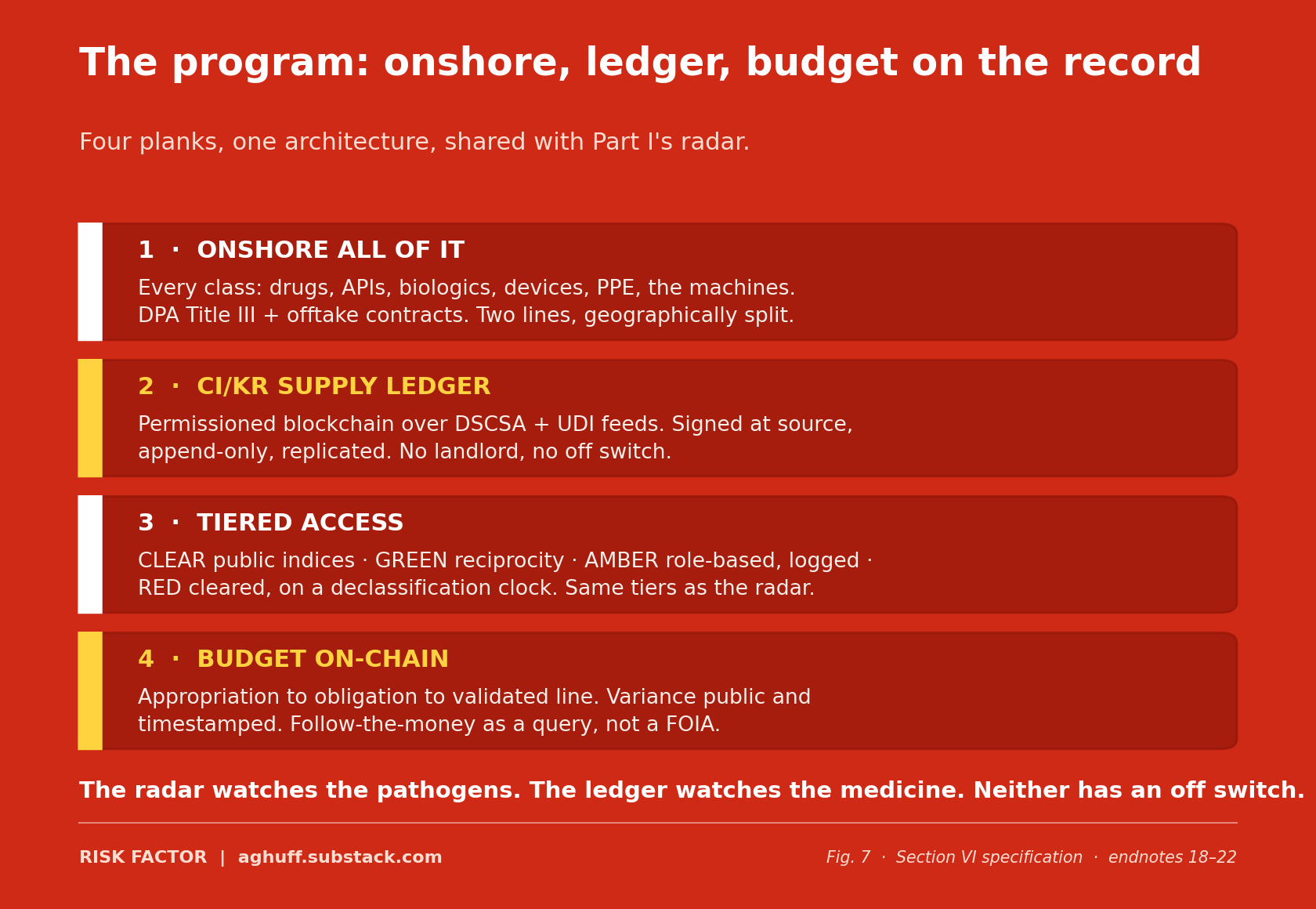
Fig. 7. The program: onshore, ledger, tiers, budget.
Build the ledger the sector already half-built. Healthcare and public health is one of the nation’s sixteen critical infrastructure sectors [19], and it is the only one whose supply chain the government admits it cannot see. Fix that with a CI/KR supply-chain ledger: a permissioned blockchain for the medical supply chain, written to by every registered manufacturer, distributor, and federal purchaser, replicated across agencies and tenants so that no single custodian, including the government, can edit the record or switch it off. This is the rare setting where a blockchain is the sober engineering answer rather than a buzzword: many mutually distrusting writers, competitors and regulators and foreign subsidiaries among them, one shared record, no landlord. And the data feeds already exist. The Drug Supply Chain Security Act already mandates serialized, electronic, unit-level tracing of every prescription drug package in the country [20], and FDA’s Unique Device Identification system does the same for devices and equipment [21]. Anchor those feeds, plus facility registrations and ingredient sourcing, to the ledger, signed at the source, append-only, in the exact architecture Part I specified for outbreak data. Then a shortage becomes visible weeks before it lands, a recall traces in minutes instead of weeks, a coercion attempt leaves fingerprints, and the question FDA could not answer for Congress in 2019, who actually makes what and where, has a standing, auditable answer.
Tier the access exactly as Part I tiered the radar. CLEAR, public, no login: aggregate concentration and shortage-risk indices for every essential medicine and device class, so any citizen can see how fragile each one is without seeing any firm’s book. GREEN, reciprocity: manufacturers and hospitals that contribute their data get back the fused operational picture they helped build. AMBER, role-based and logged: facility-level and lot-level detail for credentialed regulators, epidemiologists, and contracting officers, need-to-know tied to function. RED, classified: stockpile depth, military demand signals, and countermeasure production capacity, cleared personnel only, adjudicated, audited, and on a declassification clock. One architecture, two domains: the radar watches the pathogens, the ledger watches the medicine, and neither one has an off switch or a landlord.
Put the federal budget on the same ledger. Attach the money to the record: every appropriation, obligation, and outlay for medical supply-chain programs written to the same chain and linked to the capacity it purchased, from committee markup to validated production line. Today’s federal spending transparency is self-reported, laggy, and disconnected from outcomes [22]; a $10 billion onshoring pledge in a press release cannot currently be checked against a single dollar of audited spend or a single qualified line. On-chain budget lineage ends the press-release economy: if the appropriation exists, the obligation traces; if the obligation exists, the plant materializes on schedule or the variance is public and timestamped. Start with the medical supply chain, where the national security case is cleanest, then generalize, because there is no principled reason the rest of the federal budget should be harder to trace than a vial of cisplatin. Follow-the-money should be a query, not a year of FOIA litigation.
And keep the small fixes that make the big ones work. Aim the tariff at concentration in critical generics or take it off the table, with a published supply-impact assessment required before any change to the exemption. Restore and fund the HHS shortage coordinator GAO called for [16]. Fund the standing study of clinical outcomes attributable to shortages, because you cannot defend a resilience budget against a harm you have declined to measure. And begin the sole-source audit with the three essential medicines FDA already told us have no ingredient maker outside China [6].
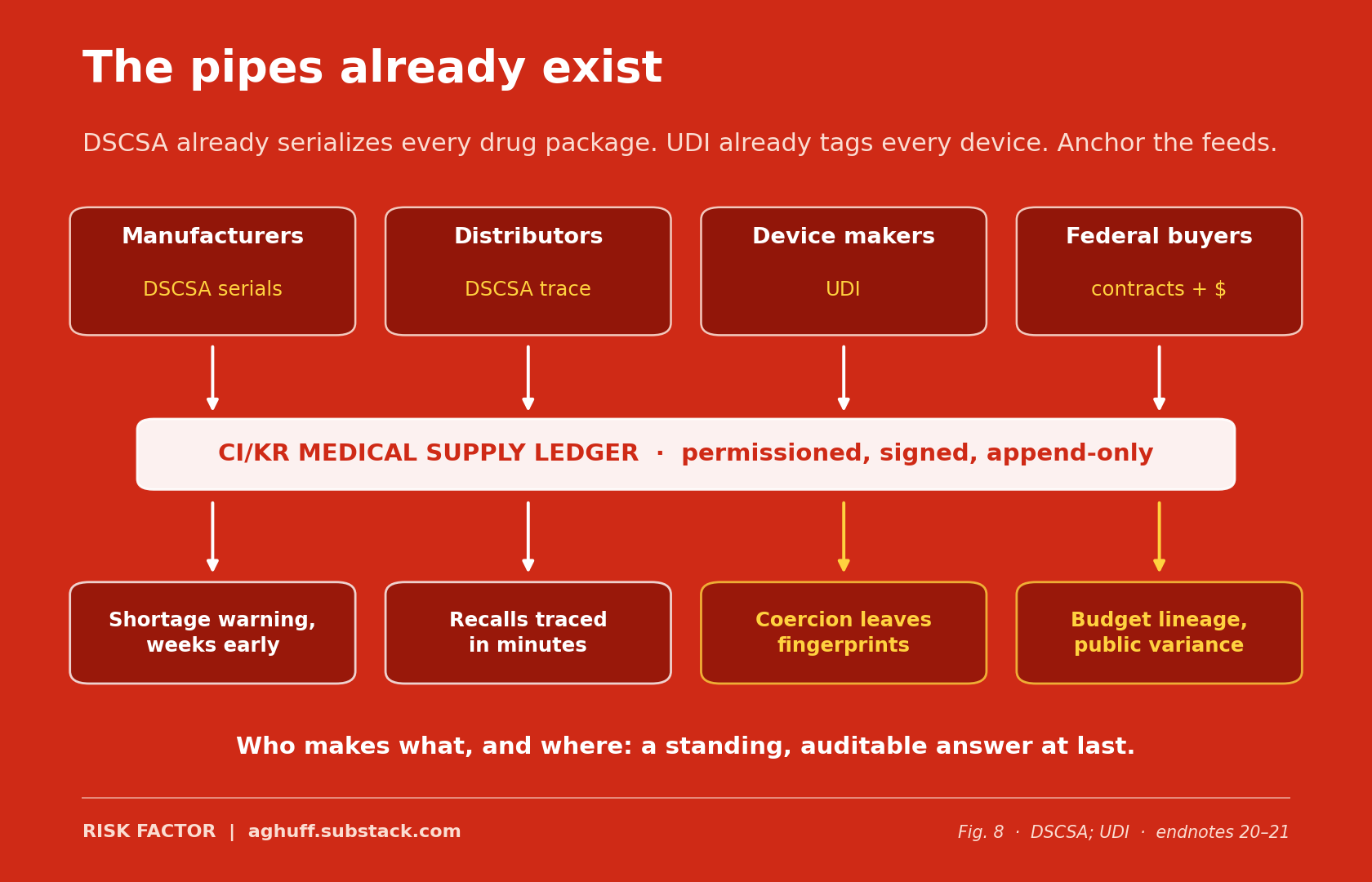
Fig. 8. The pipes already exist: DSCSA and UDI feeds anchored to one permissioned ledger.
Red Team
“You are minimizing the China threat by correcting the 90 percent figure.” The strongest objection, so it goes first. My answer: I am refusing to defend a true conclusion with a false premise, because the false premise is how the argument dies at the hands of the first competent fact-checker. The dependence is real. The Pentagon’s 27 percent is on the table, the India second-order exposure is real, and FDA itself identified essential drugs with no ingredient source outside China. All of that survives the correction. The myth does not survive contact with FDA’s own testimony, and every repetition of it weakens the policy case it is meant to serve.
“You are carrying water for pharma by criticizing the tariff’s targets.” No. The branded industry can defend itself. The point is narrower: a national security instrument should aim at the national security problem. Tariffing the category with the fewest shortages while exempting the category with all of them, and the CBRN countermeasures besides, is not toughness. It is a category error with a press release.
“The facility data are from 2019; you cannot describe 2026 with them.” Correct, and stated plainly in the text. That is an argument for measuring, not for substituting a bigger unverified number. If the government has a current, volume-weighted accounting of dependence for essential medicines, publish it. If it does not, seven years after FDA told Congress it was flying blind, that absence is the finding.
“Supply-chain visibility helps adversaries target us.” A serious objection, answered by the tiered design: aggregate concentration metrics public, facility-level detail restricted and logged. An adversary with customs records and patience already knows where the chokepoints are; Beijing does not need our disclosure regime to find capreomycin. The only party currently kept in the dark is the public bearing the risk.
“A blockchain is a buzzword strapped to a database.” Usually, yes. Most proposed blockchains should be a database and an audit log, and saying so out loud is the price of being taken seriously when the exception arrives. This is the exception, on the merits: many writers who do not trust each other, including competitors, regulators, and foreign subsidiaries; a record that must survive any single participant, including the government itself, being compromised, captured, or defunded; and an off switch that must not exist. That is the certificate-transparency pattern with permissioned writers, not coin speculation, and the marginal cost is unusually low because DSCSA serialization and UDI already generate the data stream. As for putting the budget on it: that is not surveillance of the appropriators, it is accountability of them, and the only thing a member of Congress loses is the gap between the announcement and the audit.
“Redundancy costs money someone has to pay.” Yes. Low billions annually at the outside, depending on the breadth of the essential list, paid as procurement premiums or direct capacity support. Set that against hospitals rationing chemotherapy and a Defense Department with a quarter of its drug purchases exposed to its pacing threat. Cheap insurance is still insurance.
Coming in Part III
The tariff aims at the wrong molecule. The chronic disease agenda aims at the wrong etiology.
There is a movement in Washington promising to fix American chronic disease, and it has correctly noticed that Americans are sick in ways diet and environment help explain. Then it stops. It ignores the cause of chronic disease with the strongest causal evidence in the entire literature: infection.
Epstein-Barr virus and multiple sclerosis. HPV and cervical cancer. Hepatitis B and liver cancer. H. pylori and gastric cancer. Group A strep and rheumatic heart disease. The International Agency for Research on Cancer attributes roughly 13 percent of cancers worldwide to infectious agents. These are not fringe hypotheses; several are among the best-established causal chains in modern medicine.
And the same movement is dismantling the vaccines that prevent them, on a schedule that guarantees the bill arrives in 2050 instead of the next news cycle. Ending the hepatitis B birth dose does not produce a headline. It produces cirrhosis and liver cancer decades from now, in people who do not yet know they were enrolled in the experiment.
Part III grades every claim, concedes what the movement gets right, and makes the case that a chronic disease strategy that ignores infection is not a health agenda. It is a delayed-fuse epidemic.
The Wrong Enemy, next.
Dr. Andrew G. Huff is an epidemiologist, security engineer, and former combat infantryman. He served as Vice President at EcoHealth Alliance from 2014 to 2016 and later became a whistleblower. He is the author of The Truth About Wuhan and lead author of the 2017 systematic review of global biosurveillance systems.
Competing interests: none. Funding: none. Risk Factor is funded entirely by its readers.
Corrections policy: if I have a material fact wrong, bring evidence and I will correct it in this post, visibly.
Endnotes
1. Active US drug shortages reached 227 in Q2 2026, the third consecutive quarterly increase; sterile injectables (chemotherapy, sedation agents, controlled-substance analgesics, IV fluids, electrolytes) dominate. ASHP / University of Utah Drug Information Service data as reported by AJMC (https://www.ajmc.com/view/active-us-drug-shortages-rise-for-third-straight-quarter). Verify the figure against ASHP’s shortage statistics page on publication day.
2. CT contrast agents and ifosfamide among critically scarce products, Q2 2026 (https://www.medicaldaily.com/drug-shortages-227-q2-2026-ct-contrast-ifosfamide-chemotherapy-ashp-476233). Secondary outlet; confirm against ASHP’s listing.
3. GAO-25-107110, Drug Shortages: HHS Should Implement a Mechanism to Coordinate Its Activities, April 2025: shortages most commonly affect sterile injectables critical to hospital and cancer care; new shortages have generally decreased since 2020 while lasting longer (https://www.gao.gov/products/gao-25-107110).
4. Testimony of Janet Woodcock, MD, Safeguarding Pharmaceutical Supply Chains in a Global Economy, House Energy and Commerce Committee, Subcommittee on Health, October 30, 2019: API facilities for the US market as of August 2019 were 28% US, 26% EU, 18% India, 13% China, 2% Canada, 13% rest of world; Chinese API facilities more than doubled 2010 to 2019 (https://www.fda.gov/news-events/congressional-testimony/safeguarding-pharmaceutical-supply-chains-global-economy-10302019). Verified against the FDA-hosted text.
5. Same testimony, verbatim: “we do not know whether Chinese facilities are actually producing APIs, how much they are producing, or where the APIs they are producing are being distributed worldwide, including in the United States.” Also: manufacturers are not required to report whether they produce an API at a registered facility or in what volume; FDA cannot compel a company to manufacture a drug; and FDA stated it could not perform a reliable resilience gap analysis for lack of this data.
6. Same testimony: of 370 WHO Essential Medicines marketed in the US, three had API manufacturers based only in China: capreomycin, streptomycin, and sulfadiazine.
7. Same testimony, medical countermeasures tables: ciprofloxacin API facilities: 1 US, 3 China, 21 other foreign; doxycycline: 2 US, 3 China, 6 other foreign.
8. 2023 Department of Defense assessment finding 27% of military drug purchases depend on China, as cited by the Atlantic Council (https://www.atlanticcouncil.org/blogs/econographics/sinographs/pharmaceuticals-are-chinas-next-trade-weapon/).
9. China’s 2020 Export Control Law and 2021 Biosecurity Law as authorities applicable to pharmaceutical exports. Council on Foreign Relations, The Pharma Choke Point (https://www.cfr.org/reports/the-pharma-choke-point); Brookings (https://www.brookings.edu/articles/when-medicine-supply-chains-become-weapons-chinas-leverage-and-how-the-u-s-should-respond/).
10. China holds roughly 60% of global rare earth mining and about 90% of refining and has used the position as trade leverage. CSIS (https://www.csis.org/analysis/rare-earth-export-restrictions-one-year-later and https://www.csis.org/analysis/chinas-new-rare-earth-and-magnet-restrictions-threaten-us-defense-supply-chains).
11. China’s rare earth export restrictions included carve-outs for medical uses, the strongest available evidence against a blanket-embargo scenario.
12. Proclamation of April 2, 2026 under Section 232 of the Trade Expansion Act (19 U.S.C. 1862): 100% tariff on patented pharmaceuticals (Orange Book or Purple Book listed) and their APIs and key starting materials, effective July 31, 2026 for most companies; Annex III’s seventeen companies begin September 29, 2026; Annex II’s thirteen companies with prior MFN pricing agreements exempt; products of Japan, EU member states, Korea, Switzerland, and Liechtenstein at 15%; UK surcharge reducible by bilateral agreement; Commerce-approved onshoring plans at a reduced additional rate until April 2, 2030, falling to zero with an MFN pricing agreement until January 20, 2029. Summarized from Crowell & Moring client alert, April 7, 2026 (https://www.crowell.com/en/insights/client-alerts/trump-administration-imposes-section-232-tariffs-on-patented-pharmaceutical-imports-tiered-rate-structure-takes-effect-beginning-july-31-2026).
13. Same source: generic pharmaceuticals, biosimilars, and their associated ingredients are expressly excluded at this time; Commerce is required within one year of the proclamation to advise the President whether to extend Section 232 tariffs to generics and associated ingredients. Additional exemptions include US-origin products, orphan drugs, nuclear medicines, plasma-derived therapies, fertility treatments, cell and gene therapies, antibody-drug conjugates, animal health products, and medical countermeasures for chemical, biological, radiological, and nuclear threats.
14. FDA, Drug Shortages: Root Causes and Potential Solutions, October 2019, as cited in the Woodcock testimony: of 163 drugs in shortage 2013 to 2017, quality problems were responsible 62% of the time.
15. Just under half (48%) of new 2026 shortages are sole-source products. Same ASHP-derived reporting as endnote 1.
16. GAO-25-107110: HHS lacked a coordinating structure across the department, limiting its ability to mitigate shortages and strengthen supply-chain resilience; GAO recommended HHS formally determine how to collaborate using leading practices.
17. GAO-25-107110: the HHS drug shortage coordinator position was set to end in May 2025 as designated funding expired.
18. Defense Production Act Title III (50 U.S.C. 4531 et seq.), the standing authority for expanding domestic industrial capacity, including health resources; used during COVID-19 for pharmaceutical and PPE capacity.
19. Healthcare and Public Health is one of the sixteen critical infrastructure sectors designated under Presidential Policy Directive 21 and its successor framework (https://www.cisa.gov/topics/critical-infrastructure-security-and-resilience/critical-infrastructure-sectors).
20. FDA, Drug Supply Chain Security Act (DSCSA): serialized, electronic, interoperable unit-level tracing of prescription drug packages (https://www.fda.gov/drugs/drug-supply-chain-integrity/drug-supply-chain-security-act-dscsa).
21. FDA, Unique Device Identification System (https://www.fda.gov/medical-devices/device-advice-comprehensive-regulatory-assistance/unique-device-identification-system-udi-system).
22. Digital Accountability and Transparency Act of 2014 and USAspending.gov, the current baseline for federal spending transparency: agency self-reported, published on a lag, and not linked to delivered outcomes.