

Epidemiologist. Security engineer. Former Q-cleared scientist, Sandia National Laboratories. Ph.D. in Environmental Health Science, Emerging Infectious Disease and Epidemiology, DHS Center of Excellence Research Fellow. Former U.S. Army infantryman.
Bottom Line Up Front. Five judgments, scored 0 to 100 on confidence, with evidence graded known, assessed, or unknown throughout.
1. SARS-CoV-2 was spreading in humans months before any government told the public. Spread by November to December 2019 is established across independent lines of evidence (confidence 95). I assess spread began no later than September 2019 (confidence 90); the ladder is graded rung by rung below.
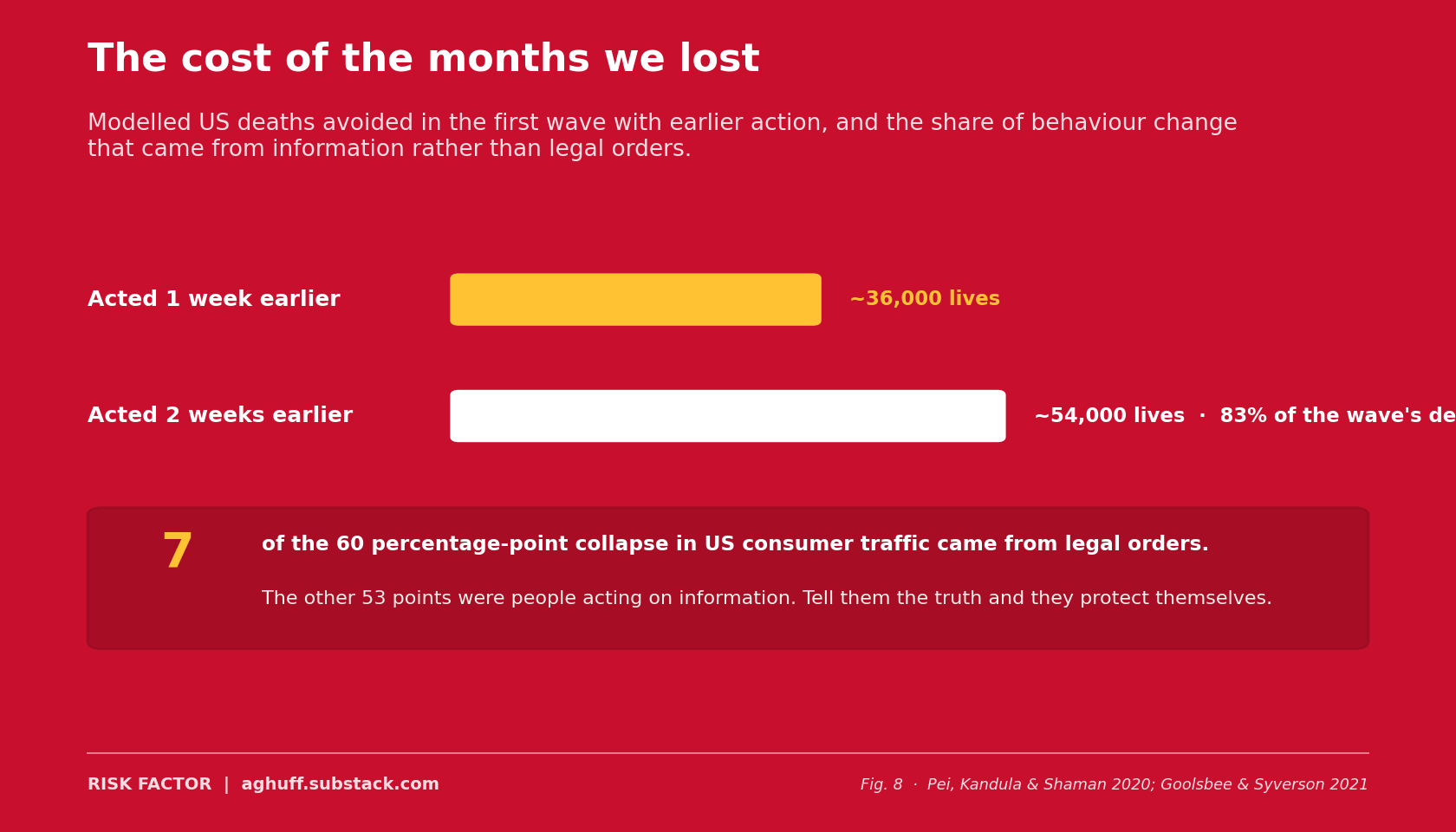
2. Earlier, honest, public data would have saved tens of thousands of American lives. Published counterfactuals put one to two weeks of earlier action at 36,000 to 54,000 fewer US deaths in the first wave alone (confidence 95 that the true figure is at least in the tens of thousands).
3. Surveillance data held in private custody fails the public predictably, under every system of government. It gets suppressed, spun, weaponized, and deleted. This is not a China problem. It is a custody problem (confidence 95).
4. The United States is running the pre-COVID contraction again right now. The national wastewater system runs out of money on September 30. I documented the same curve in the peer-reviewed literature three years before the pandemic (confidence 95).
5. The fix is not a better custodian. It is architecture: one human, animal, and environmental surveillance commons, public by default, tiered where it must be, standards-based, federated, signed at the source, and impossible to switch off quietly. Every component exists today, and I know the build is feasible because I led the team that designed and prototyped it in 2015 and offered it to the Department of Homeland Security for $2.3 million. The pandemic that followed cost roughly seven million times that (confidence 90 on feasibility; the receipts are in Section III).
I. The Signal Existed
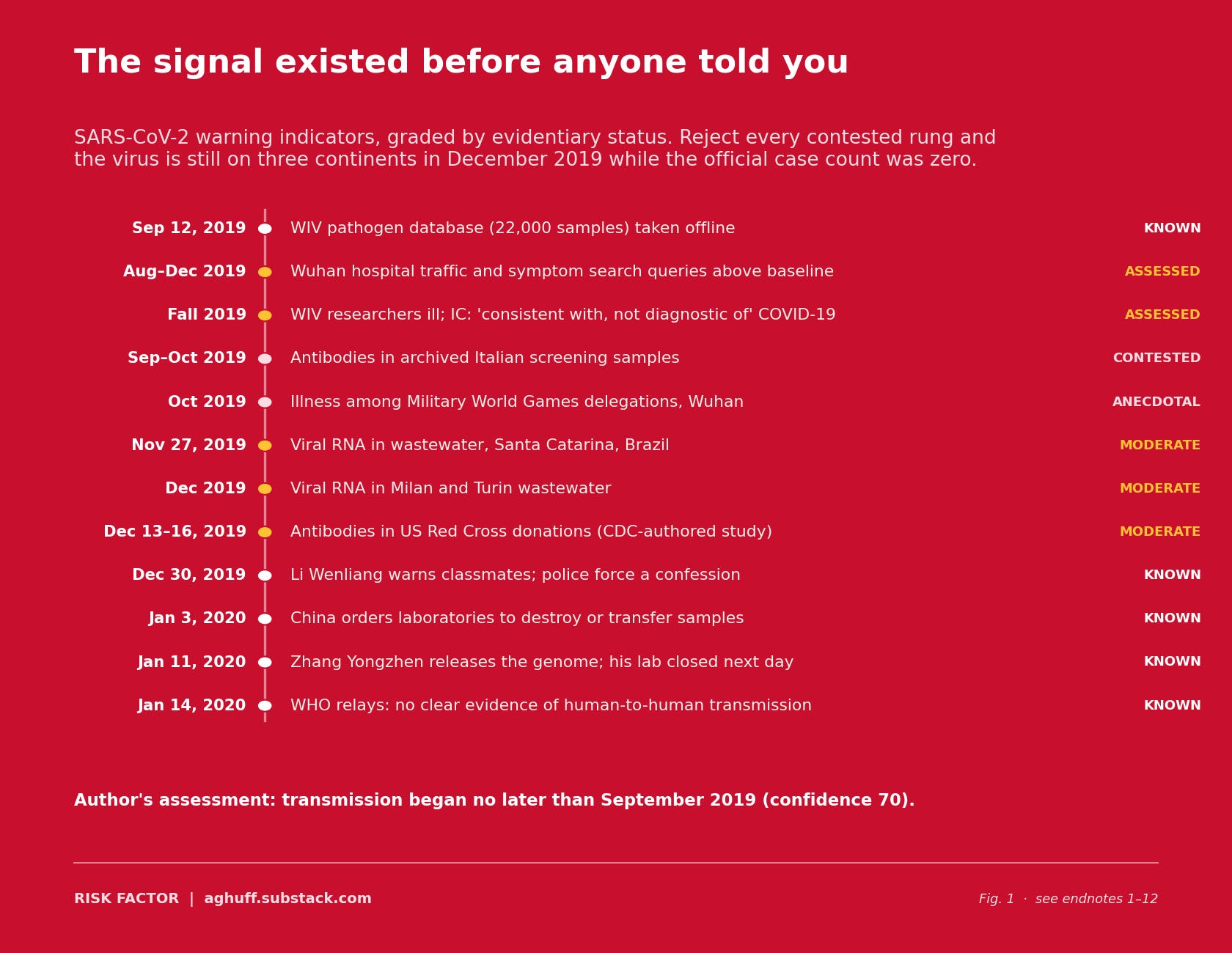
Start with what is not in dispute. On December 30, 2019, Dr. Li Wenliang told his medical school classmates in a private chat that seven patients with a SARS-like illness were isolated at Wuhan Central Hospital. Police summoned him and made him sign a confession for “spreading rumors.” He was dead of the disease by February 7 [1]. On January 3, 2020, China’s National Health Commission ordered laboratories to destroy or transfer their samples and barred publication [2]. The genome reached the world on January 11 only because one scientist, Zhang Yongzhen, authorized its release to an open forum. His laboratory was closed the next day [3]. On January 14, the World Health Organization relayed that there was no clear evidence of human-to-human transmission [4].
That is the documented floor: the signal existed, custodians sat on it, and the men who moved it anyway were punished.
Now the ladder above the floor, graded honestly.
· September 12, 2019. The Wuhan Institute of Virology’s pathogen database, roughly 22,000 samples and sequences, went offline and never returned. Known fact; circumstantial as to spread [5].
· August to December 2019. Wuhan hospital parking-lot traffic and search queries for “cough” and “diarrhea” ran above baseline. Assessed; the methodology drew legitimate criticism [6].
· Fall 2019. Several WIV researchers fell ill with symptoms the Intelligence Community later called consistent with, but not diagnostic of, COVID-19. Assessed by the IC itself [7].
· September to October 2019. SARS-CoV-2-reactive antibodies in archived Italian screening samples. Contested; retesting was mixed and cross-reactivity is not excluded [8].
· October 2019. Illness among delegations at the Military World Games in Wuhan. Anecdotal; no confirmatory serology published [9].
· November 27, 2019. Viral RNA in wastewater in Santa Catarina, Brazil. Moderate; single laboratory [10].
· December 2019. Viral RNA in Milan and Turin wastewater [11], and SARS-CoV-2-reactive antibodies in American Red Cross donations collected December 13 to 16 on the US West Coast, published by CDC’s own scientists [12].
My assessment, with my name on it: transmission began no later than September 2019 (confidence 70). Reject every contested rung and you are still standing in November, with the virus on three continents by December while the official case count was zero.
Why the date matters to you. People protect themselves when they are told the truth. The economics literature found that legally binding orders explained only about 7 of the 60 percentage-point collapse in US consumer traffic in early 2020; the rest was voluntary, driven by information [13]. Columbia modelers estimated that acting one week earlier would have saved roughly 36,000 American lives in the first wave, and two weeks roughly 54,000, some 83 percent of that wave’s dead [14]. A Nature analysis found Chinese cases would have fallen 66, 86, or 95 percent with interventions one, two, or three weeks sooner [15]. Whatever rung you accept, the world lost months, not days. Those months were the price of custody.
II. Custody Is the Failure Mode
Resist the comfortable conclusion that this is a story about China. It is a story about what any institution does when it holds the only copy of dangerous information.
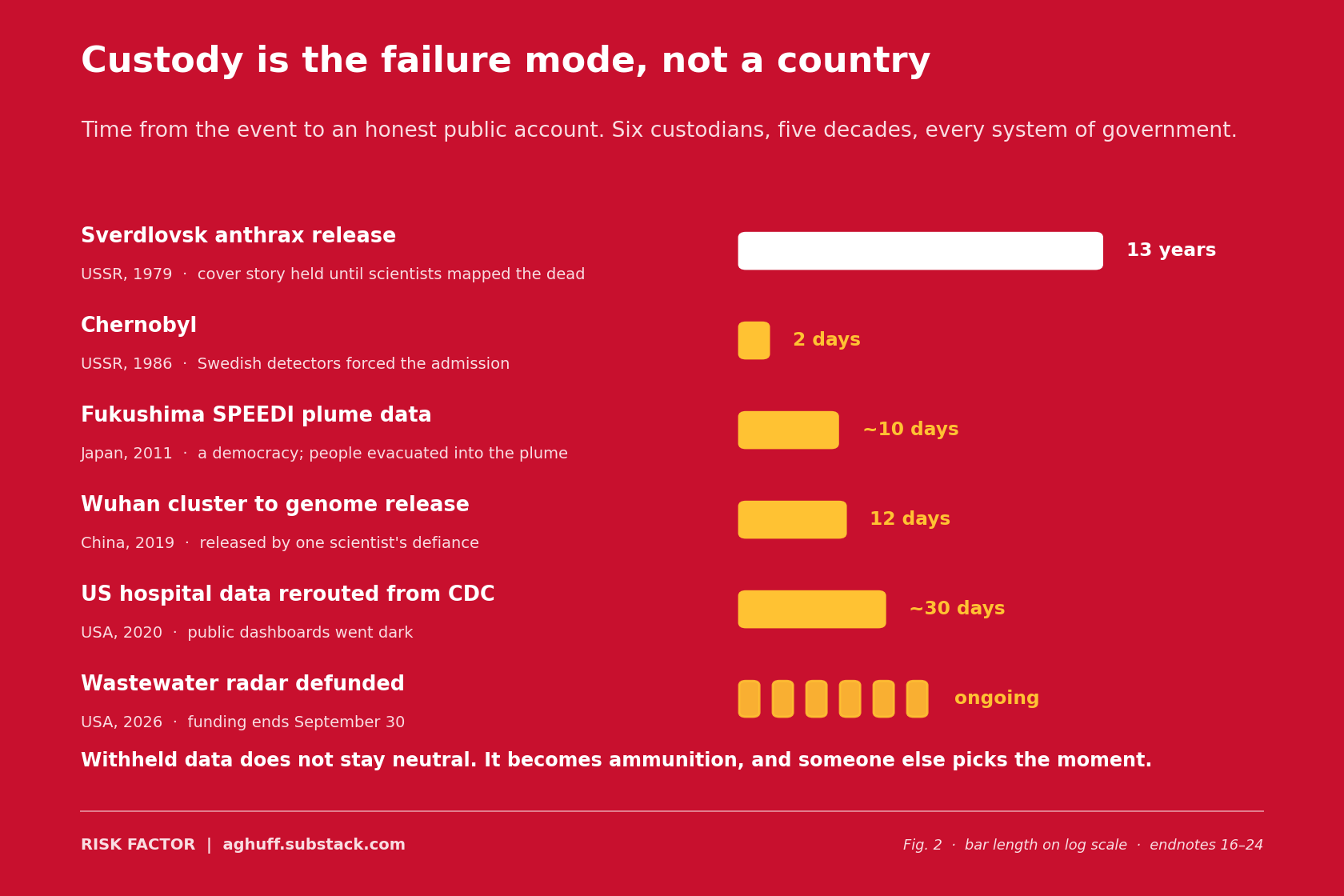
Sverdlovsk, 1979: anthrax escaped a Soviet military facility and killed at least 66 people. The cover story, contaminated meat, held for thirteen years, until independent scientists plotted the victims and found them in a line downwind of the plant [16]. Chernobyl, 1986: Moscow said nothing until radiation detectors at a Swedish plant 700 miles away forced the admission. Open foreign sensors, not Soviet candor, told Europe to bring its children inside [17]. Fukushima, 2011, a democracy this time: Japan withheld its SPEEDI plume models, and communities evacuated directly into the fallout path. The Diet’s own commission called the disaster man-made, a failure of institutions rather than reactors [18].
Then the United States. CDC monopolized early testing in 2020 and shipped faulty kits while private labs waited for weeks. In July 2020 the administration rerouted hospital COVID data out of CDC into a closed HHS system and public dashboards briefly went dark [19]. Officials told Americans masks did not work in order to preserve supply, then reversed, and trust has not recovered. Every one of these is custody logic: the public cannot be trusted with the signal, so the custodian will manage it. The custodian managed it into the ground.
Now watch 2026 run the same play. The National Wastewater Surveillance System, the cheapest early-warning radar this country has ever built, is funded only through September 30. The FY2027 request would cut it from roughly $125 million to roughly $25 million; that is a proposal, not enacted law, but the cliff is real regardless [20]. This summer, CDC’s dashboard read national COVID wastewater activity as “very low” while the independent academic network WastewaterSCAN read “medium” and rising [21]. PRAMS, which tracks maternal and infant health, suspended collection [22]. And in June, ODNI released a selectively declassified deck about US-funded overseas laboratories; within seven days Russia’s Ministry of Defense had folded it into its standing bioweapons disinformation campaign and pledged to raise it in treaty fora [23]. Withheld data does not stay neutral. It becomes ammunition, and someone else picks the moment to fire it.
One more case, and it cuts against the reflex to classify. In April 2020 it was reported that a US military intelligence unit had warned of a contagion in Wuhan as early as November 2019; the National Center for Medical Intelligence issued a rare public denial that any such product existed [24]. I hold no brief for either version. The point is that the dispute is permanently unresolvable because everything about it is classified, and that a secret warning, if it existed, moved no one and saved no one. Open data is self-authenticating. That is the argument in one sentence.
III. I Counted the Radar. Then I Tried to Build It.
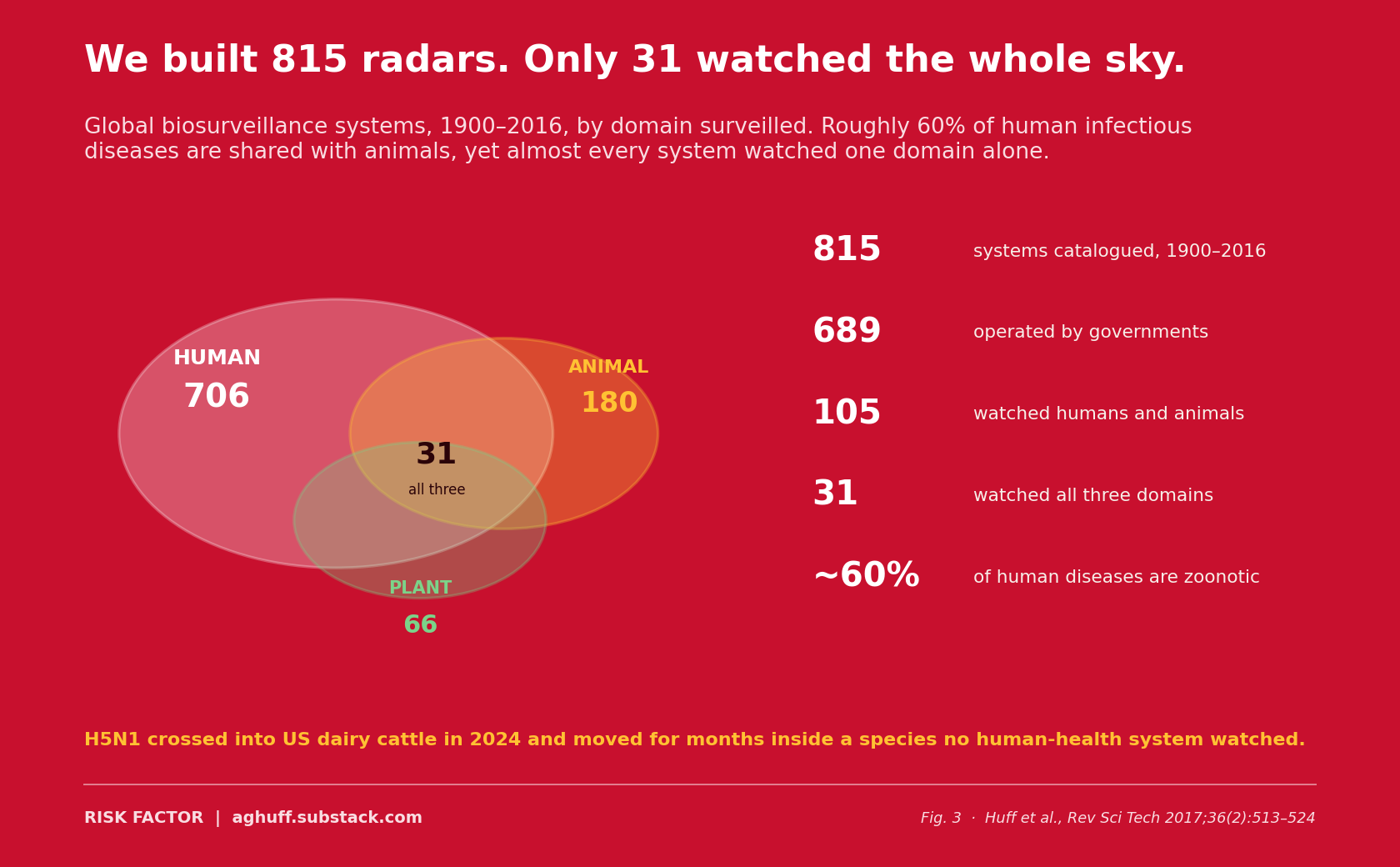
In 2017, with colleagues, I published the first systematic census of the world’s biosurveillance systems: 815 of them, human, animal, and plant, from 1900 to 2016, in the World Organization for Animal Health’s scientific review [25]. I was at EcoHealth Alliance then. I later became a whistleblower about what I saw there, and I would rather a reader weigh that provenance than never see it. Read the paper. Three findings matter tonight.
The silos. Of 815 systems, only 105 watched humans and animals together, and only 31 watched all three domains, while roughly 60 percent of human infectious diseases are shared with animals [26]. We built hundreds of radars that each watch a third of the sky. When H5N1 crossed into American dairy cattle in 2024, it moved for months inside a species no human-health system was watching. That blind spot was structural, and it was in print seven years ahead of time.
The custody. Governments operated 689 of the 815 systems. Our discussion section put it in plain academic English: global biosurveillance may be “limited, and public health jeopardized, if biosurveillance is overly controlled by governmental organizations,” particularly “when governments are incentivized to avoid reporting infectious disease outbreaks, due to the severe negative economic implications of outbreaks” [25]. We also mapped coverage per capita, and the thinnest radar among major states, 0.001 systems per 100,000 people, belonged to China, alongside Iran and India, a gap we tied explicitly to China’s history with SARS and avian influenza. Three years later the pandemic emerged exactly where the map showed the least radar and the strongest incentive to suppress. I take no satisfaction in that. It was peer-reviewed, published, and ignored.
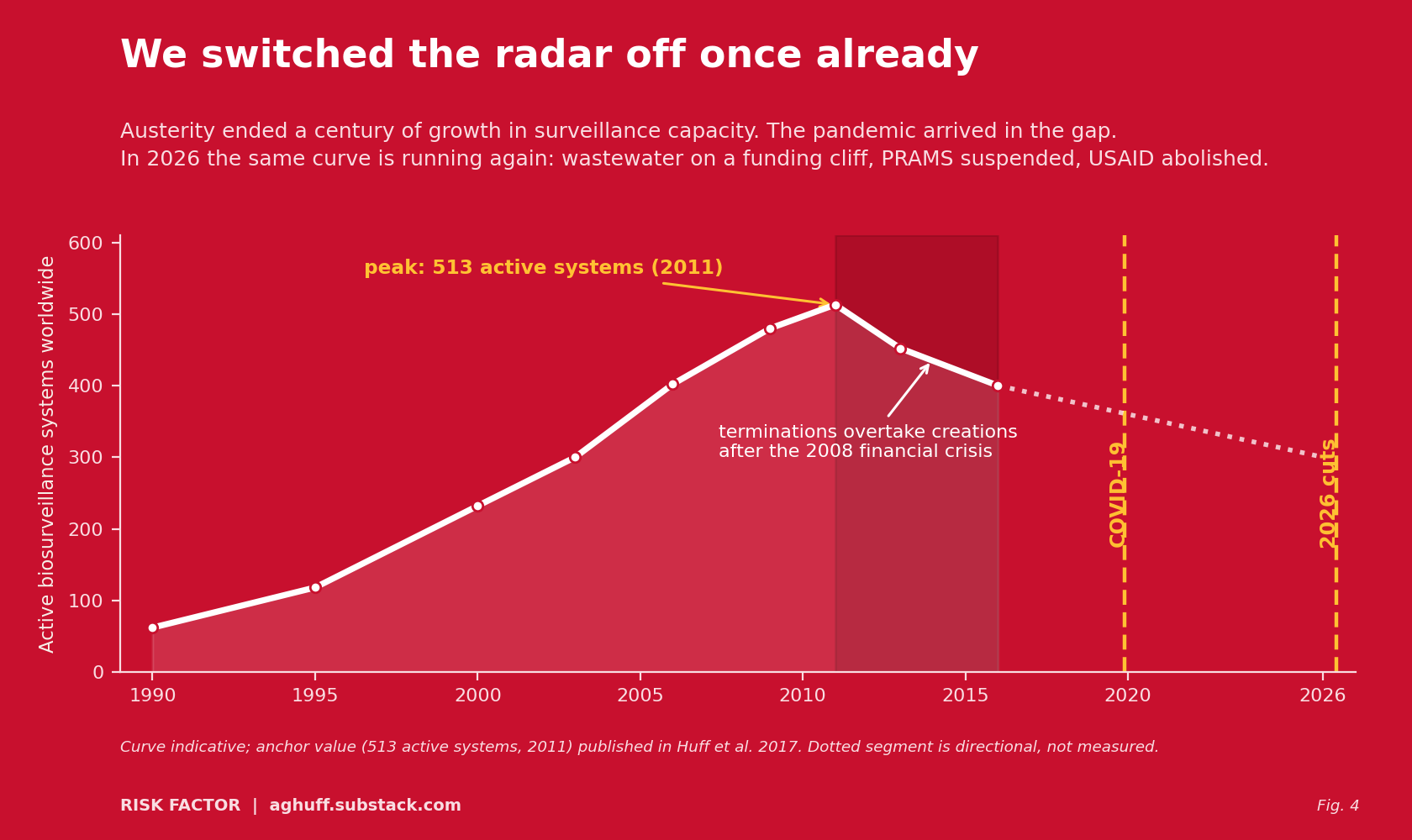
The contraction. System creation peaked in 2009. After the 2008 financial crisis, terminations overtook creations and the world’s active radar count fell for the first time in a century of growth [25]. Austerity switched off the radar, the pandemic arrived in the gap, and in 2026 we are tracing the same curve: wastewater on a cliff, maternal surveillance suspended, datasets pulled, and USAID, which part-funded that very census, abolished outright.
State the limitations before a hostile reviewer does: information bias against older and defunct systems, nearly half the database missing classification fields, and counts that measure existence rather than capability. The detection-speed trend we cited, discovery falling from about 30 days to 13.5 and public reporting from 40 to 19 [27], is confounded by technology. And the load-bearing finding is not even ours: a 2013 evaluation found no single surveillance system was best, and a virtual combination of six beat every one of them on sensitivity and timeliness [28]. Hold onto that.
Now the part I have never written about publicly. We did not stop at counting the radar. We designed the replacement, and I have the receipts in front of me as I write. In 2015, before the census was even in print, I led a project at EcoHealth Alliance called Mantle: a free, open-source platform, Apache-licensed, code on GitHub, for storing, sharing, and visualizing One Health biosurveillance data across humans, animals, and the environment [35]. It had the pieces this article proposes, a decade early. Fine-grained access tiers: every dataset private, shared with named users and groups, or fully public, with spatial obfuscation as a middle setting so a farm or a village could contribute without being identifiable. Federation: anyone could run their own Mantle server, and instances interoperated over open semantic-web standards, so no one owned the network. Machine-readable metadata on every dataset, a mobile app for field collection, DOI minting so shared data earned academic credit, and a working prototype, the Global Ranavirus Reporting System, aggregating wildlife disease observations from scientists worldwide. The white paper stated the thesis of this essay in 2015 language: “the desire of single entities to control and leverage information for greater personal and organizational wealth and power directly opposes the goals of biosurveillance, One Health, and science” [35].
We pitched it to the Department of Homeland Security’s Science and Technology Directorate in July 2015, with ProMED and the International Society for Disease Surveillance as named subcontractors. The quad chart asked for $2,296,336.59 over two years and stated, accurately, “no such technology exists.” It even listed, under challenges, the exact failure mode this article answers with signed provenance: “malicious or inaccurate data injected into system” [35]. The proposal was not funded. Mantle never shipped. Four years later a pneumonia cluster in Wuhan sat in a filing cabinet, and the pandemic that followed cost the United States an estimated $16 trillion [34], roughly seven million times the price of the radar we declined to build. I am not claiming Mantle would have caught COVID; a platform is not a time machine, and adoption is the hard part. I am claiming something narrower and better documented: the architecture was specified, prototyped, and offered to the US government five years before the pandemic, and the gap it named is still open.
IV. Storms Got a Radar. Pathogens Got a Filing Cabinet.
We solved this problem once already, for weather. The National Weather Service publishes its radar, models, and warnings to everyone, in real time, free. Private forecasters build products on the public feed. Nobody panics at a hurricane track; they buy plywood and leave. Weather data crossed the Iron Curtain through the World Meteorological Organization at the height of the Cold War, because every government understood that the atmosphere ignores borders. EPA’s RadNet publishes near-real-time radiation readings from hundreds of American monitors today and no one calls it reckless [29].
Every objection now raised against open disease data was once available against open weather data: the public will misread it, panic, adversaries can see it too. The weather enterprise answered with architecture instead of custody: standards, provenance, and tiered products running from raw feed to plain-language warning. The panic argument in particular is folklore; five decades of disaster research find people act rationally on honest warnings, and the documented panics of 2020, the hoarding and the conspiracy bloom, followed vacuums and reversals rather than disclosure [13].
But note the incentive problem before we build. South Africa sequenced and announced Omicron within days in November 2021 and was rewarded with travel bans by the end of that week [30]. Right now, honesty is punished. Architecture has to make it pay.
V. The Biosurveillance Commons: One Radar, Whole Sky
What follows is a specification, not a wish. It is Mantle, matured: the 2015 design rebuilt on 2026 standards, with the lessons of a pandemic written into it. Every component is in production somewhere today; what is missing is the decision. The design principle comes first: no custodian should ever again be positioned to sit on the signal. Not Beijing, not Atlanta, not an administration, not a company, not me. You do not fix custody by choosing a better custodian. You remove the chokepoint.
One system, three domains. Human, animal, and environmental surveillance share one substrate, with chemical and radiological feeds beside the biological ones, because the next warning may not be a virus. This is the correction to the central finding of my 2017 census. A pathogen does not change identity when it moves from a bird to a cow to a farmworker, and the record should not either. One sky, one radar.
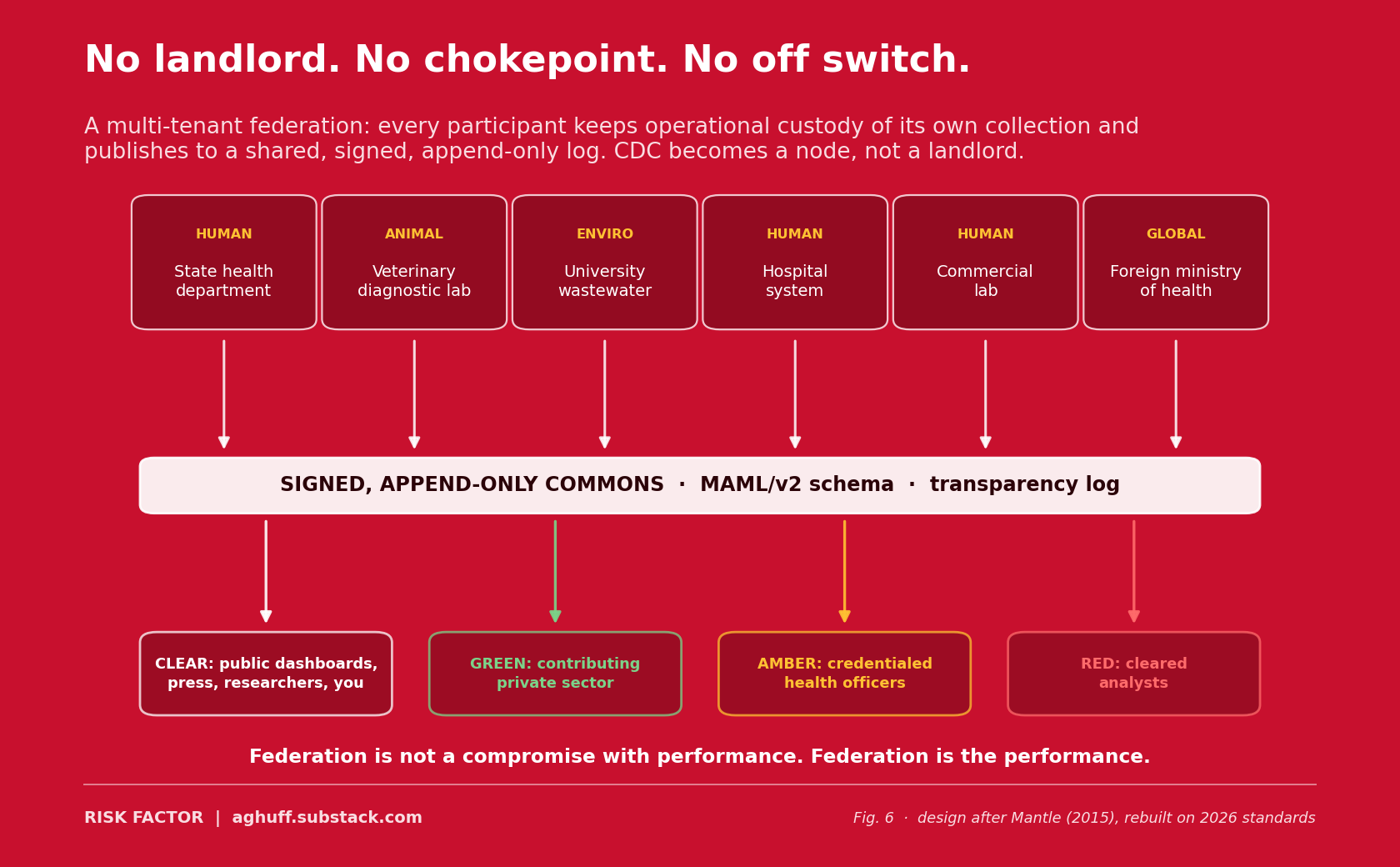
Federated and multi-tenant, because monopoly custody is the disease we are curing. Every participant, a state health department, a tribal nation, a veterinary diagnostic lab, a university wastewater program, a hospital system, a commercial testing company, a foreign ministry of health, operates as a tenant node with its own namespace, keys, and retention control, with hard tenant isolation and zero-trust boundaries between tenants [31]. Nodes keep operational custody of their own collection; publication to the common bus is the condition of membership. No agency owns the commons. CDC becomes a node, not a landlord. Mantle proved the pattern in miniature a decade ago: independently run instances, interoperating over open standards, with no landlord anywhere in the design [35]. Federation runs on three axes: jurisdiction, sector, and modality. This is the 2013 finding turned into engineering, where the fused feed beat every individual system [28]. Federation is not a compromise with performance. Federation is the performance. It also means no single government can switch the commons off, which is the point.
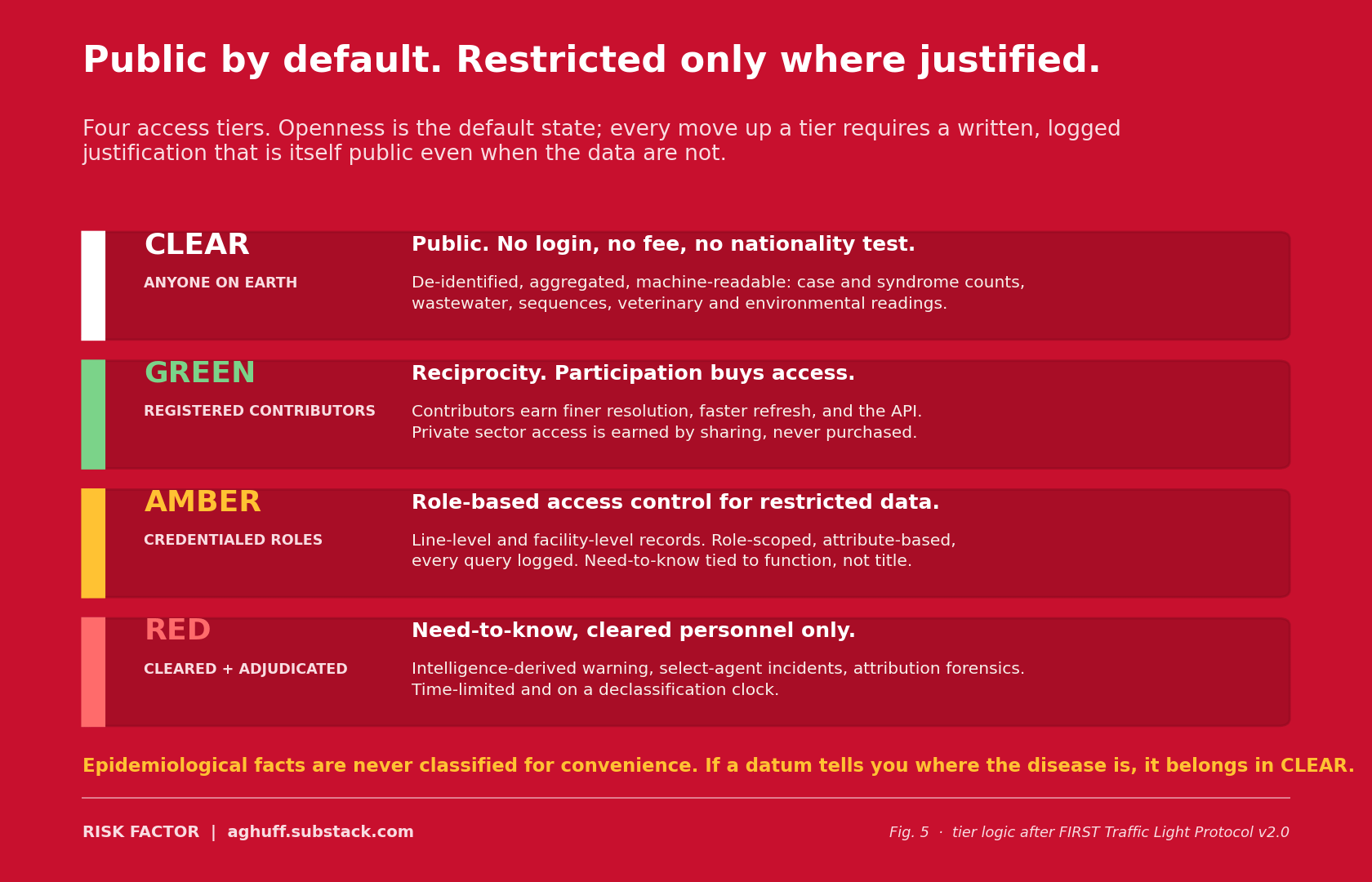
Tiered access, public by default. Cybersecurity settled this taxonomy years ago with the Traffic Light Protocol [32], and the commons should borrow its logic.
· CLEAR, the default: public, de-identified, aggregated, machine-readable, no login, no fee, no nationality test. Case and syndrome counts above a minimum cell size, wastewater concentrations, sequences, veterinary and wildlife detections, environmental and radiological readings, all with provenance attached. Every record lands here unless a written, logged justification moves it up a tier, and that justification is itself public even when the data are not. This is the tier that would have carried the December 30, 2019 Wuhan cluster to every epidemiologist on earth the day it was recorded.
· GREEN, reciprocity: participation buys access. Any organization that contributes earns finer geographic resolution, faster refresh, linkage tooling, and the API rather than the dashboard. A commercial lab, pharmacy chain, telehealth platform, or livestock integrator that shares its de-identified signal gets back the fused operational picture it helped build. Give to get, the model already working in the cyber threat-sharing ISACs [32]. Private-sector access is earned by contribution, never purchased, and hoarders can watch the CLEAR tier like everyone else.
· AMBER, role-based access control for restricted data. Line-level and facility-level records, the granular data that could re-identify a person or ruin a farm or a hospital before verification. Epidemiologists, clinicians, state and local health officers, and credentialed researchers receive role-scoped access under NIST access-control families, attribute-based where finer control is needed, with every query logged and auditable [33]. Need-to-know is tied to a defined function, not a title. Spatial obfuscation, which Mantle implemented in 2015, sits at this boundary: the outbreak is visible to everyone at CLEAR resolution while the farm gate stays identifiable only at AMBER [35].
· RED, need-to-know and cleared only. Intelligence-derived warning, select-agent laboratory incidents, attribution forensics. Adjudicated, time-limited, audited, and on a declassification clock, because RED is a stage in a record’s life, not its grave. The NCMI lesson lives here [24]: a warning that never leaves the vault protects no one, so the presumption runs toward downgrade. And one hard rule the current system lacks: epidemiological facts are not classified because their implications are inconvenient. A cluster count, a sequence, a wastewater signal, or a case definition is a public health fact. If a datum tells you where the disease is, it belongs in CLEAR no matter how it was found. Sources and methods stay protected. The biology does not.
Signed at the source, impossible to revise quietly. Write access requires registration: identity, organization, and signing keys. Read access at CLEAR requires nothing at all. Every record is cryptographically signed by its originating node and committed to an append-only transparency log, the same pattern that guards the web’s certificate system. Corrections are expected and are visible events carrying their own provenance. Nothing is silently deleted; datasets are deprecated in public, never disappeared in the night. That is the technical answer to Sverdlovsk, to the January 3 sample-destruction order, and to the 2020 rerouting of American hospital data. Li Wenliang would not have needed a group chat. He would have needed a signing key.
Here is the December 30, 2019 cluster as a record in this system.
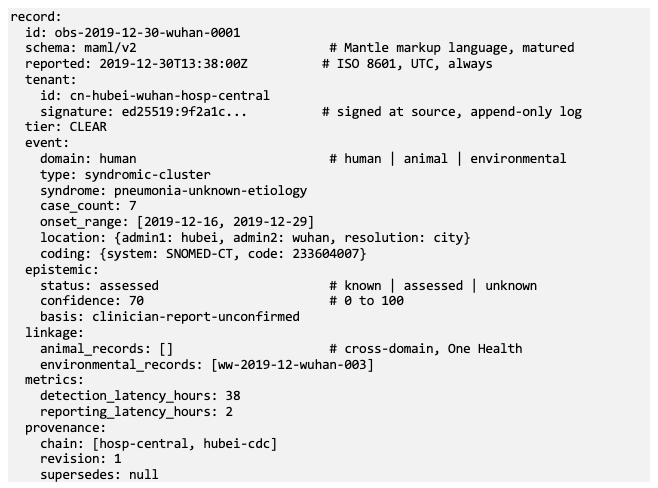
Note the schema name. Mantle’s design files include a metadata language, MAML, for describing datasets so machines could fuse them without human cleanup [35]; this is that idea grown up, in YAML, with one addition the 2015 version lacked and 2020 proved essential: the epistemic block. Known, assessed, unknown, with a confidence score, as a mandatory machine-readable field on every record. That single choice answers the false-alarm objection structurally. The commons does not publish certainty; it publishes signals with honest error bars, which is what adults use to make decisions. The record above is about two kilobytes. Publishing it on December 30, 2019 would have cost nothing and changed the course of the century.
Standardized, because consistency is what makes impact measurable. Schemas versioned in YAML with public change logs. Stable case definitions, and when a definition changes, old and new run in parallel long enough to splice the series, so a mayor in 2032 can compare her county to 2026 without an asterisk. Payloads on HL7 FHIR for clinical exchange, LOINC and SNOMED CT for coding, PHA4GE and GA4GH for pathogen genomics, Darwin Core for wildlife, with WOAH and IHR obligations satisfied as a byproduct of publishing rather than as a separate diplomatic act a government can decline to perform [33]. Security and governance mapped to the NIST Cybersecurity Framework 2.0 and SP 800-53, zero trust per SP 800-207, identity assurance per SP 800-63, privacy engineering per the NIST Privacy Framework with HIPAA de-identification and differential privacy on small cells so no farmhouse or hospital ward is identifiable from CLEAR. Node operations certified to ISO/IEC 27001, continuity to ISO 22301, laboratory competence to ISO/IEC 17025, biorisk to ISO 35001, timestamps to ISO 8601, because inconsistent time formats alone destroyed comparability across jurisdictions in 2020 [33].
And one designation that sounds bureaucratic and is actually the whole ballgame: the commons is categorized under FIPS 199 with availability rated HIGH [33]. In plain English, switching it off becomes a formal, visible, justified act rather than a line quietly zeroed in an appropriations markup. You are allowed to kill the radar in this country. You are not allowed to kill it in the dark.
Measurement built in, not bolted on. Every record carries the fields needed to prove whether surveillance is working: detection latency from specimen to record, reporting latency from record to publication, completeness against denominators, and outcome linkage. The commons publishes its own performance metrics continuously, so the question my 2017 paper could not answer, whether more surveillance actually produces faster detection, becomes measurable instead of confounded [27]. A radar that cannot be audited will be defunded in the next budget cycle, and it will deserve to be.
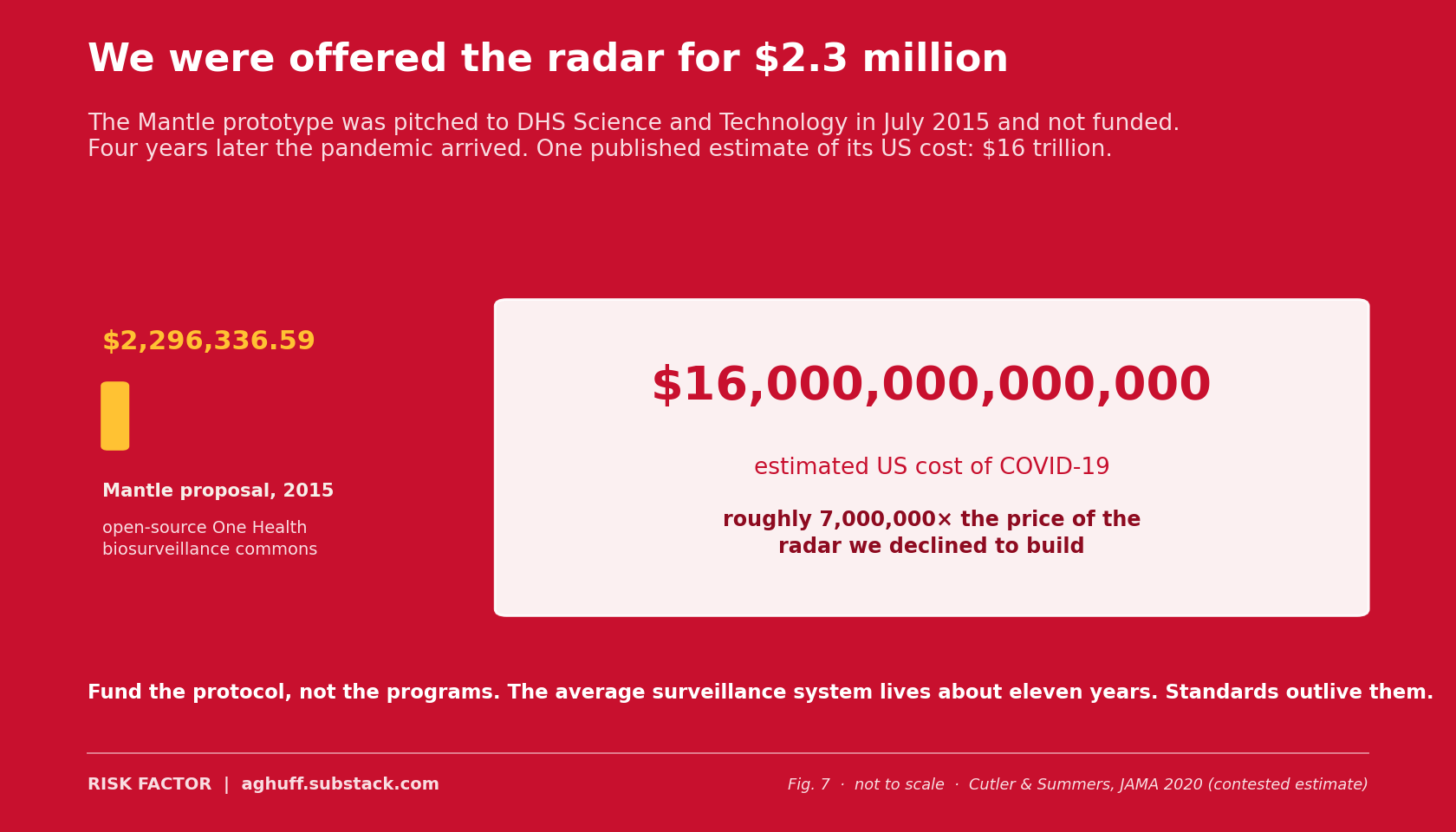
What it costs. Full funding for the wastewater system Congress is about to let lapse runs roughly $125 million a year, about forty cents per American [20]. A serious commons across all modalities and tiers is a single-digit-billions program over a decade. The pandemic it exists to catch early cost the United States an estimated $16 trillion [34]. In 2015 the federal government was offered the prototype for $2.3 million and passed [35]. That asymmetry is not close enough to argue about. And fund the protocol, not the programs: my own census found the average surveillance system lives about eleven years [25]. Programs die. Standards persist. The commons must be chartered to outlive its founders, its budget lines, and its administrations.
VI. The Hard Problems, Stated Honestly
Sovereignty and incentives. States hide outbreaks because disclosure is punished, and South Africa is the proof [30]. An architecture that demands only transparency will produce only silence. Disclosure has to be paired with benefit: priority access to countermeasures, sample and benefit sharing on the Nagoya model, financing that rewards reporting, and a norm among the founding states against reflexive travel bans on whoever reports first. Transparency has to become the profitable move.
Privacy. Aggregate disease data and individual health records are different things, and conflating them is how these projects die. De-identification happens at generation, not on request; identifiable data never leaves AMBER. The public tier must be barred by law from immigration, law enforcement, and insurance use, or participation will collapse in exactly the communities where blind spots kill people.
Dual use. Publishing pathogen sequences does give adversaries information. The honest answer is that the chokepoint for misuse is synthesis screening rather than publication, that most sequences are already public, and that the defensive value is immediate and enormous. That fight is real, and it is Part IV of this series.
VII. What To Do Now
Congress should fund the National Wastewater Surveillance System past September 30 and authorize it permanently instead of year to year; bipartisan legislation to expand the program already exists as the vehicle [20]. Attach an openness condition to every federal surveillance appropriation: data generated with public money publishes to the public tier by default, in a standard format, within a defined latency, and no agency communications office may embargo it. Categorize the commons at FIPS 199 availability HIGH so that switching it off requires an act of Congress. Direct CDC, USDA, DOI, EPA, and DoD to publish to one schema instead of five. Fund node accreditation so a rural county or a foreign ministry can join without building its own stack.
And for you: the reason any of this works is that the public tier is legible to citizens. When CDC says “very low” and independent monitors say “medium and rising,” you should be able to check both yourself, today, without permission. That is not a flaw in the design. That is the design.
Red Team
“You are laundering a fringe theory about September 2019 through a policy proposal.” The strongest objection, so it goes first. The architecture argument does not depend on September. Take only the rungs no serious analyst disputes, November to December 2019, and the indictment of custody is unchanged. I graded every rung and gave my confidence precisely so a reader who rejects the contested ones still arrives at the same conclusion.
“You worked at EcoHealth Alliance. Why should anyone take your proposal seriously?” Because I saw the custody problem from inside an institution that was part of it, published the structural warning in the peer-reviewed literature in 2017 while still there [25], and became a whistleblower when institutional and public interest diverged. Weigh that history as you see fit. This proposal is designed so that no future insider, including one like me, ever has to choose between a career and a warning. The architecture is the whistleblower.
“You will burn sources and methods.” The RED tier exists for exactly that, and the commons publishes signals rather than collection. The classified alternative has already been tried: if the November 2019 warning existed, it saved no one [24]. Secrecy failed on its own terms. Confidence that a tiered model protects legitimate secrets while beating the status quo on warning: 85.
“Radical transparency is a gift to adversaries and to disinformation.” Partly true, and June 2026 is the proof [23]. But note what fed that operation: selective, partial, government-controlled disclosure. Ambiguity is the raw material of disinformation. A complete, signed, timestamped public record is the hardest target propaganda can face, because every claim can be checked against a log no one can alter.
“Open data will cause panic.” Fifty years of disaster research say otherwise, and 2020 says the vacuums and reversals caused the panic. The tiered design already separates raw feeds from interpreted products, exactly as the weather service has done for a century.
“Interoperability projects fail constantly.” Fair, and the graveyard is real; my own census found the average system survives about eleven years [25]. That is the argument for funding a protocol rather than a program, because standards outlive their implementations, which is why we still use ISO 8601 and TCP/IP. It is also why this proposal is not speculative: the tiered sharing, the federation, and the metadata layer all ran in prototype in 2015 [35]. The engineering was never the obstacle. The decision was.
“This is a grudge about a proposal DHS turned down.” State it plainly, because someone will. Mantle was free and open source under the Apache license; there was no equity to protect and there is none now. If the design had been funded and had failed, that failure would be evidence against this article. It was not funded, the gap it named stayed open, and the cost of the gap has since been measured in trillions and in the dead. Readers can decide whether that record argues for my judgment or against it. What they cannot say is that the warning arrived late.
“The private sector will refuse.” Some will. GREEN-tier reciprocity is the answer: contribute and receive the fused picture, or stay outside it. Any firm that spent 2020 flying blind on its own workforce risk knows what that picture is worth.
Coming in Part II
The radar tells you the threat is coming. Part II asks what is in the cabinet when it arrives, and finds that America has outsourced the manufacture of its essential medicines to the country most likely to be on the other side of the next crisis. Made Somewhere Else, next.
Dr. Andrew G. Huff is an epidemiologist, security engineer, and former combat infantryman. He served as Vice President at EcoHealth Alliance from 2014 to 2016 and later became a whistleblower. He is the author of The Truth About Wuhan, lead author of the 2017 systematic review of global biosurveillance systems cited throughout this piece, and was principal investigator of Mantle, the 2015 open-source One Health biosurveillance platform on which the architecture proposed here builds.
Competing interests: none. Funding: none. Risk Factor is funded entirely by its readers.
Corrections policy: if I have a material fact wrong, bring evidence and I will correct it in this post, visibly. That is the same standard I am asking of the system.
Endnotes
1. Li Wenliang’s December 30, 2019 messages, his police reprimand, and his death on February 7, 2020; documented in contemporaneous reporting and in the Chinese government’s own subsequent investigation, which exonerated him posthumously.
2. China National Health Commission directive of January 3, 2020 ordering destruction or transfer of samples and barring publication; Associated Press reporting and subsequent congressional records.
3. Zhang Yongzhen’s release of the genome to Virological.org on January 11, 2020, and the closure of his laboratory the following day. Verify the closure sequence against Caixin and Nature reporting before publication.
4. World Health Organization statement of January 14, 2020 relaying Chinese authorities’ finding of no clear evidence of human-to-human transmission.
5. Wuhan Institute of Virology pathogen database taken offline September 12, 2019; documented in House and Senate committee records.
6. Nsoesie EO et al., 2020 preprint on Wuhan hospital traffic and search-query trends; criticized on methodology. Assessed, not known.
7. Office of the Director of National Intelligence, declassified COVID-19 origins assessment, June 2023, on fall 2019 illnesses among WIV researchers.
8. Apolone G et al., Tumori Journal, 2020, on SARS-CoV-2 antibodies in Italian screening samples; independent retesting mixed. Contested.
9. Reports of illness among Military World Games delegations, October 2019. Anecdotal; no confirmatory serology published.
10. Fongaro G et al., Science of the Total Environment, on SARS-CoV-2 RNA in Santa Catarina, Brazil wastewater dated November 27, 2019. Single laboratory.
11. La Rosa G et al., Science of the Total Environment, 2021, on SARS-CoV-2 RNA in Milan and Turin wastewater, December 2019.
12. Basavaraju SV et al., Clinical Infectious Diseases, 2020; CDC-authored study of American Red Cross donations collected December 13 to 16, 2019.
13. Goolsbee A, Syverson C. Fear, lockdown, and diversion. Journal of Public Economics, 2021.
14. Pei S, Kandula S, Shaman J. Columbia University modeling of earlier intervention, May 2020.
15. Lai S et al. Effect of non-pharmaceutical interventions to contain COVID-19 in China. Nature, 2020.
16. Meselson M et al. The Sverdlovsk anthrax outbreak of 1979. Science, 1994.
17. Forsmark nuclear plant detections, April 28, 1986, forcing Soviet acknowledgment of Chernobyl.
18. National Diet of Japan Fukushima Nuclear Accident Independent Investigation Commission, 2012, and the SPEEDI disclosure failure.
19. Redirection of hospital COVID-19 data from CDC to HHS Protect, July 2020; contemporaneous reporting and subsequent oversight review.
20. CDC FY2027 Congressional Justification. NWSS funded through September 30, 2026; the FY2027 request would reduce it from roughly $125 million to roughly $25 million. Proposed, not enacted. Bipartisan wastewater surveillance legislation has been introduced; confirm bill number and status before publication.
21. Divergence between CDC and WastewaterSCAN wastewater readings, August 2026. Verify both dashboards on the day of publication and quote the readings directly.
22. Pregnancy Risk Assessment Monitoring System collection suspension and grant expiration, 2025 to 2026.
23. ODNI declassified release on US-funded overseas laboratories, June 12, 2026; Russian Ministry of Defense briefing incorporating it, June 19, 2026.
24. ABC News report of April 8, 2020 on an alleged November 2019 NCMI product, and NCMI’s public denial. Unresolved and unresolvable while classified.
25. Huff AG, Allen T, Whiting K, Williams F, Hunter L, Gold Z, Madoff LC, Karesh WB. Biosurveillance: a systematic review of global infectious disease surveillance systems from 1900 to 2016. Rev Sci Tech Off Int Epiz. 2017;36(2):513-524. doi:10.20506/rst.36.2.2670.
26. Karesh WB et al. Ecology of zoonoses: natural and unnatural histories. Lancet, 2012;380:1936-1945.
27. Chan EH et al. Global capacity for emerging infectious disease detection. PNAS, 2010;107(50):21701-21706. Cited in reference 25 with a 2014 date; the correct year is 2010.
28. Barboza P et al. Evaluation of epidemic intelligence systems integrated in the Early Alerting and Reporting Project for the detection of A/H5N1 influenza events. PLoS ONE, 2013;8(3):e57252.
29. EPA RadNet near-real-time environmental radiation monitoring network.
30. South African identification and announcement of the Omicron variant, November 24 to 26, 2021, followed within days by international travel bans.
31. Multi-tenant isolation and zero-trust segmentation per NIST SP 800-207, Zero Trust Architecture.
32. FIRST Traffic Light Protocol version 2.0, and the information-sharing and analysis center model established under US critical-infrastructure policy.
33. Standards bundle: NIST Cybersecurity Framework 2.0, SP 800-53, SP 800-63, SP 800-207, NIST Privacy Framework, FIPS 199; ISO/IEC 27001, ISO 22301, ISO/IEC 17025, ISO 35001, ISO 8601; HL7 FHIR, LOINC, SNOMED CT, PHA4GE, GA4GH, Darwin Core. Cite specific document numbers and versions at publication.
34. Cutler DM, Summers LH. The COVID-19 pandemic and the $16 trillion virus. JAMA, 2020;324(15):1495-1496. A contested estimate that includes mortality and morbidity valuation; state it as one published estimate, not a settled figure. The “seven million times” comparison divides this estimate by the Mantle quad-chart cost and inherits its uncertainty.
35. The Mantle record, from the author’s files: Mantle white paper, EcoHealth Alliance, 2015 (Apache License 2.0, code on GitHub); Mantle full proposal to DHS Science and Technology Directorate under BAA 15DHS-001-TTA-3-0009-I, submitted July 1, 2015, with ProMED, the International Society for Disease Surveillance, Distributed Information Technologies Inc., and Clango Inc. as subcontractors; Mantle quad chart, topic CBA-06, cost $2,296,336.59 over two years, stating “no such technology exists”; presentation to the ISDS conference, June 2015; and the Global Ranavirus Reporting System prototype. Documents available to qualified researchers on request. The characterization of the proposal’s outcome reflects the author’s records; confirm the final agency disposition language before publication.
Your central point is excellent. Custody of the data is the problem. There have been ways for decades to have monitoring and awareness, but it is nearly always undermined by monied interests wishing to control human behavior instead of empowering humans to make informed decisions. There is a fundamental worldview behind their paradigm. Part of their paradigm is intended to reduce the population. They need life expectancy to decline. They achieve that through controlling the information or doing surveillance in completely the wrong way. The funded surveillance mechanisms are intended to destroy, not to empower.
You make another point that I will summarize as reactive costs thousands of percentages more than proactive. Absolutely true. Every case study reinforces that fact. The rational approach would be to take a proactive approach. Your essay clearly identifies the mandatory attributes of the proactive approach. But the cost for irrationality is absorbed by the taxpayer, so it is “other people’s money”. There is little to no incentive to spend responsibly.
The part that your essay does not acknowledge or possibly you don’t agree on this point, while lives could be saved, that was not the desired intent. The intent was to decrease life expectancy while transferring hard and soft assets upstream. Your proposed system is rational and in alignment with a public interest goal system. It is logical that a government funded resource should be aligned with public interest, yet that attribute of funded systems is rarely ever the reality.
The question now is whether Congress is a wholly owned subsidiary of monied interests or if Congress has the critical thinking and intestinal fortitude to enable the proactive approach to an essential national security issue that has no partisan lines when rationally assessed.
Thank you for your essay. I understand the time commitment involved in producing something which is well researched, well cited, and well organized.
The interdisciplinary aspects are obvious here. Well done.
https://www.chds.us/c/
The Irregular Warfare aspects of the Integrated Information Domain and Cognitive Warfare dimension stand out here as encompassing your approach.
I have to admit that not many discrepant epidemiology studies take this approach in the public domain...which makes you and your data sets quite valuable.
https://www.chds.us/selfstudy/courses/irregular-warfare-101/
CHDS Support
Naval Postgraduate School Center for Homeland Defense and Security
chdstech@nps.edu
https://www.chds.us
https://www.hsdl.org
https://www.chds.us/uapp
https://www.chds.us/selfstudy
Have you reached out to Dr Gardner as without your help I cannot see how best practice in the IW and Strategic Competition framework can meet the threshold adequate for retrospective analysis of COVID Origin case study and the prospective resources gathered to help detect and deter the next round of IW in these domains.
Dr. Jeffrey V. Gardner
Dr. Gardner is the Chief of Curriculum and Senior Faculty at the Irregular Warfare Center (IWC). He is a retired U.S. Army Lieutenant Colonel who served at all levels from tactical to strategic. He has deployments to the Balkans, Afghanistan and in a Joint Special Operations Task Force in Iraq. He served at the U.S. European Command and on the staff of U.S. Joint Chiefs of Staff. After retiring he worked at NATO Allied Command Transformation as a counter terrorism planner and instructor. He also served as a Colonel of Militia commanding a state defense force brigade for incident response, command and control and crisis management.